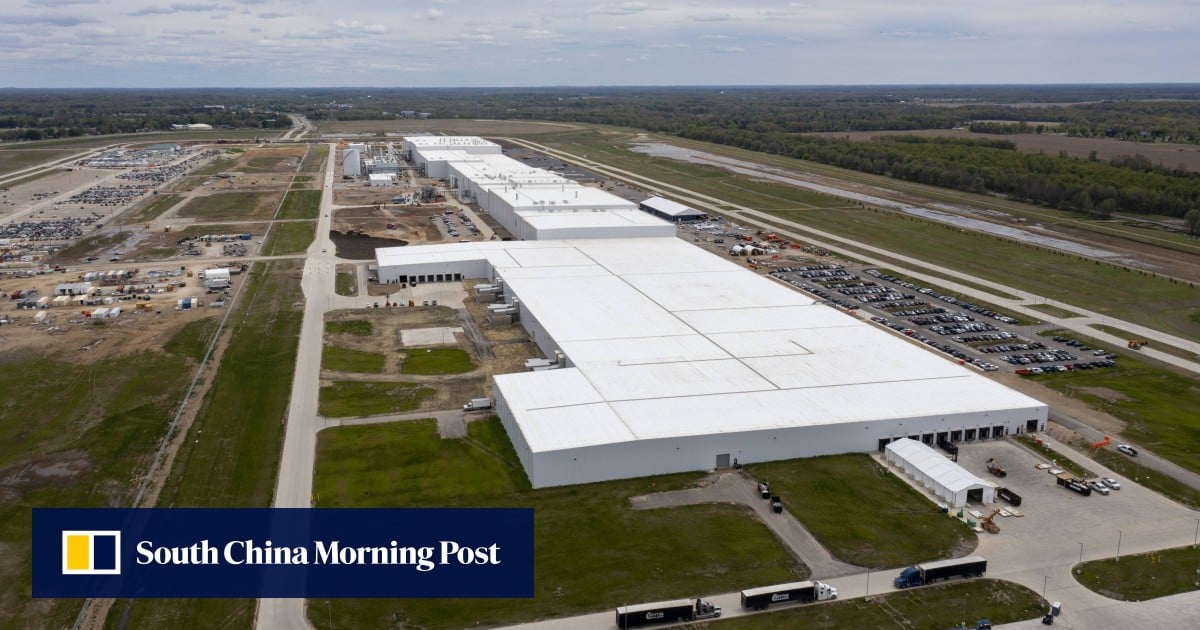
- The Ford-CATL battery plant exemplifies the critical dependence of global automakers on Chinese manufacturing capabilities.
- Analysts emphasize that collaboration with Chinese suppliers is essential for international carmakers to remain competitive in the evolving automotive landscape.
- The upcoming Xi-Trump summit underscores the geopolitical implications of automotive supply chains and the necessity for strategic partnerships.
The urgency of the automotive industry's reliance on China has never been more pronounced, particularly as global carmakers navigate an increasingly competitive landscape dominated by Chinese manufacturers. The recent announcement of the Ford-CATL battery plant highlights this dependency, revealing that international automakers must forge alliances with Chinese suppliers to maintain their market positions. This development is not merely a business decision; it reflects a broader trend where the capabilities of Chinese firms are becoming indispensable for the success of global automotive strategies.
The Ford-CATL partnership is a clear signal that traditional automotive giants are recognizing the need to integrate Chinese technology and manufacturing prowess into their operations. Analysts from Morgan Stanley have pointed out that without such collaborations, international carmakers risk falling behind their Chinese counterparts, who are rapidly advancing in electric vehicle technology and battery production. This strategic pivot towards Chinese suppliers is not just about cost efficiency; it is also about accessing cutting-edge innovations that are crucial for developing competitive electric vehicles.
The implications of this shift extend beyond mere business considerations; they are deeply intertwined with geopolitical dynamics. The upcoming Xi-Trump summit is poised to address these critical issues, as the automotive sector serves as a microcosm of the broader U.S.-China relationship. The summit could potentially influence trade policies and regulatory frameworks that govern these partnerships, making it essential for stakeholders to stay attuned to the outcomes. The automotive industry stands at a crossroads, where decisions made at the highest levels of government could reshape the competitive landscape for years to come.
As the automotive sector continues to evolve, the need for collaboration with Chinese firms will likely intensify. This trend underscores a fundamental shift in how global carmakers approach their supply chains, moving from a model of independence to one of interdependence. The Ford-CATL plant is not just a facility; it represents a strategic alliance that could redefine the future of automotive manufacturing and innovation. For international carmakers, embracing this reality will be crucial for navigating the complexities of a rapidly changing market.