- Global electric vehicle battery demand surpassing 1 TWh in 2024 underscores the urgent need for effective recycling strategies.
- The transition from traditional waste management to a circular economy for lithium-ion batteries is gaining momentum.
- Establishing commercially viable supply chains for battery materials is critical for sustaining the EV market and reducing reliance on raw material extraction.
The surpassing of 1 terawatt hour in global electric vehicle battery demand in 2024 marks a pivotal moment in the industry, highlighting an urgent need for innovative recycling solutions. As the demand for EVs continues to surge, the pressure to recover valuable materials from used batteries intensifies. This shift is not merely about managing waste; it represents a fundamental transformation in how the industry views battery lifecycle management. The emphasis is now on creating a sustainable, circular economy that can support the burgeoning EV market while mitigating environmental impacts associated with raw material extraction.
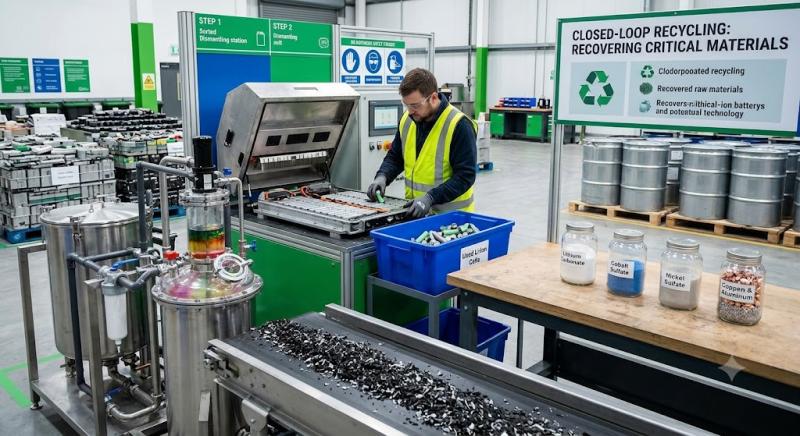
The transition from a traditional waste management approach to a more proactive circular economy model is becoming increasingly critical. This change is driven by the recognition that lithium-ion batteries contain valuable materials that can be recovered and reused, thus reducing the need for new raw materials. As the industry evolves, recycling is being redefined from a downstream activity to an integral part of the supply chain. This evolution is essential not only for environmental sustainability but also for economic viability, as it can help stabilize material costs and supply in the face of growing demand.
Establishing commercially viable supply chains for battery materials is paramount for the future of the electric vehicle sector. The current landscape reveals a pressing need for innovative recycling technologies and processes that can efficiently recover critical minerals from spent batteries. As manufacturers and stakeholders invest in these technologies, the potential for creating a robust circular economy becomes more tangible. This shift not only addresses the immediate challenges of battery disposal but also positions companies to capitalize on the growing market for recycled materials, which is expected to expand significantly in the coming years.
In conclusion, the exceeding of 1 TWh in global EV battery demand signals a transformative phase for the industry, where the focus on recycling and material recovery will play a crucial role in shaping the future of electric mobility. The move towards a circular economy is not just a trend; it is a necessary evolution that will determine the sustainability and resilience of the EV market. As stakeholders align their strategies with these emerging realities, the potential for innovation and growth in battery recycling will be critical in meeting both consumer demand and environmental responsibilities.