Please note: This article was created as a technical guide for customer use at BigEV.com. While it may be shared externally, its purpose was intended as more of a reference than editorial.
Electric bikes, or e-bikes, are becoming increasingly popular in the United States due to their convenience, efficiency, and eco-friendly appeal. However, the legal landscape governing their use can be complex and varies significantly at state and local levels. Understanding these laws is essential for riders, manufacturers, and retailers alike to ensure compliance and safe usage.
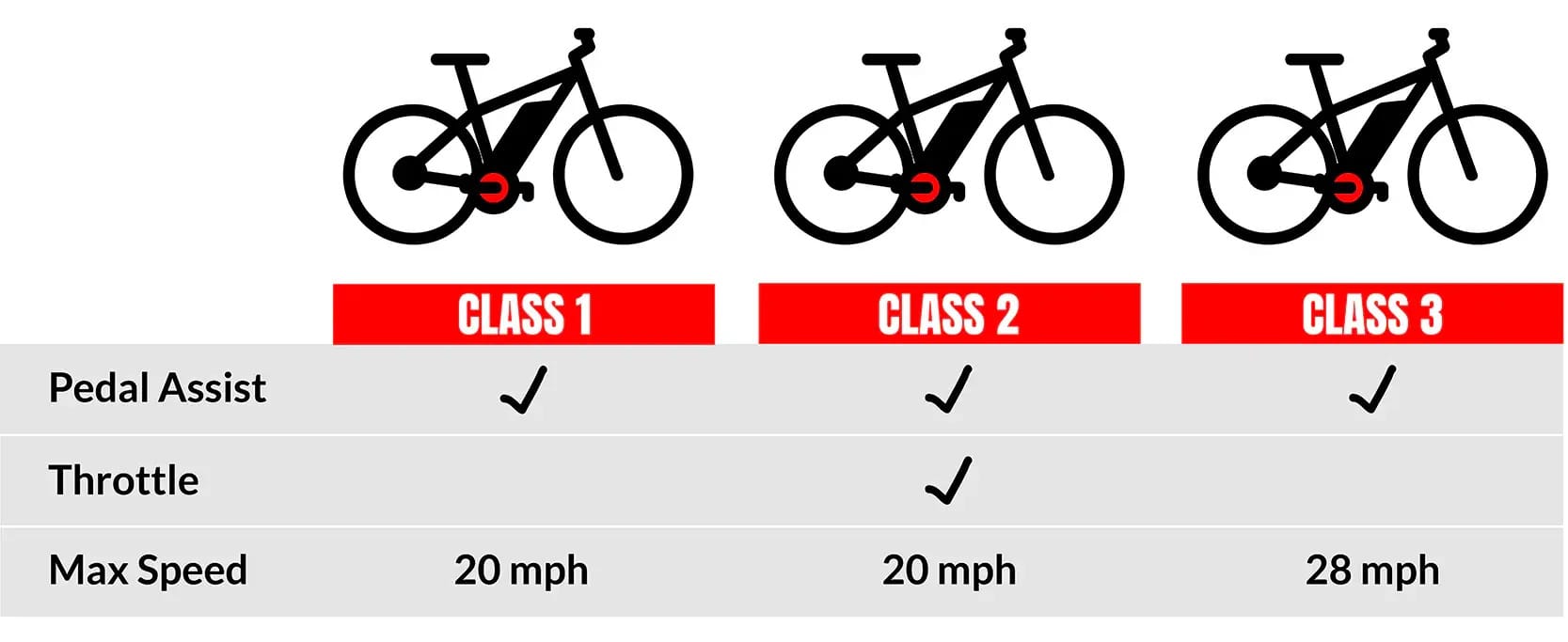
E-bikes are often classified into three categories based on speed and motor capabilities. These include Class 1 (pedal assist with a maximum speed of 20 mph), Class 2 (throttle-assisted with a maximum speed of 20 mph), and Class 3 (pedal assist with a maximum speed of 28 mph). This classification system has become an industry standard but adoption of it is not uniform across all states, leading to varying rules in different jurisdictions.
Several key areas are regulated under state and local laws, including helmet requirements, age restrictions, and where e-bikes are permitted to operate. In many states, Class 3 e-bikes have stricter requirements, such as mandatory helmets or restrictions on using bike paths and trails. Licensing, registration, and insurance requirements also differ widely. For instance, some states treat e-bikes like traditional bicycles, while others regulate them more like motor vehicles.
Federal law, governed by the Consumer Product Safety Act, defines e-bikes as bicycles with operable pedals and a motor under 750 watts. However, this standard applies only to manufacturing and sales, leaving operational regulation to states. Riders must stay informed about local laws, as enforcement can vary even within a single state.
What is an Electric Bike? Definitions and Classifications
An electric bike, often referred to as an e-bike, is a bicycle equipped with an integrated electric motor and battery system designed to assist with propulsion. While retaining the functionality of traditional bicycles, e-bikes incorporate advanced technology that enhances the rider's experience by allowing varying degrees of motorized assistance. The motor typically activates when the rider pedals and supplements physical effort, making it easier to navigate challenging terrain or travel longer distances.
E-bikes are classified based on specific criteria, including how the motor delivers power and the maximum speed at which assistance is provided. These classifications are essential for understanding regulations, as they often determine where and how e-bikes can be legally operated.
Common E-Bike Classifications
- Class 1: Pedal-Assist
- Motor provides assistance only when the rider is pedaling.
- Assistance is limited to a maximum speed of 20 mph.
- No throttle is included for motor activation.
- Class 2: Throttle-Assist
- Motor can be activated via a throttle without the need for pedaling.
- Maximum motor-assisted speed is capped at 20 mph.
- Class 3: Speed Pedal-Assist
- Motor provides assistance only during pedaling, similar to Class 1.
- Assistance is limited to a higher speed threshold of 28 mph.
- Often includes a speedometer and may have usage restrictions on bike paths.
The classification scheme allows manufacturers, riders, and regulators to distinguish between different types of e-bikes, guiding operational rules and safety standards. Understanding these categories ensures clarity when interpreting varying state and local laws governing e-bike usage.
Federal vs. State Regulations: Understanding the Differences
The regulatory framework surrounding electric bikes (e-bikes) in the United States consists of both federal and state-level rules, each serving distinct purposes and enforcing varied standards. Understanding these differences is vital for e-bike owners, manufacturers, and retailers to ensure compliance and safe usage.
At the federal level, e-bike regulations focus on product standards and manufacturing requirements. The Consumer Product Safety Act classifies e-bikes as "low-speed electric bicycles" if they meet specific criteria: a maximum motor-assisted speed of 20 mph when powered solely by the motor, functional pedals, and a motor with a power output not exceeding 750 watts. Federal law defines these vehicles as bicycles, exempting them from motor vehicle regulations like registration and licensing. The U.S. Consumer Product Safety Commission (CPSC) oversees compliance with these manufacturing guidelines, ensuring that e-bikes meet safety and labeling standards.
State governments, however, control the rules governing how e-bikes are operated on public roads, trails, and other spaces. States define e-bikes through their classification systems—often divided into three classes based on speed and motor assistance. These classifications influence where e-bikes can be ridden, whether helmets are required, and how age restrictions are applied. Some states mandate additional safety measures such as operator licensing or specific equipment like lights and reflectors.
The combination of federal and state laws can create regulatory overlap, but it also allows states to address their unique geographic, environmental, or safety concerns. Riders must remain informed about the rules in their specific state, as state laws supersede federal regulations for on-road usage.
E-Bike Classes Explained: Class 1, Class 2, and Class 3
Understanding the classification of e-bikes is essential when evaluating their legal requirements and permitted uses across different jurisdictions in the United States. E-bikes are commonly divided into three classes, each defined based on the level of motor assistance and maximum speed capabilities.
Class 1
Class 1 e-bikes are equipped with a motor that provides assistance only when the rider is pedaling. These models are often referred to as pedal-assist bikes. The motor ceases to provide assistance once the e-bike reaches a speed of 20 miles per hour (mph). Class 1 e-bikes are generally allowed on bike paths, multi-use trails, and most roadways, as they are considered closest to traditional bicycles in functionality.
Class 2
Class 2 e-bikes are distinct because they feature a throttle-assisted motor. This means the rider can accelerate the bike without pedaling using a handlebar throttle mechanism. Like Class 1 models, Class 2 e-bikes have a maximum motor-assisted speed of 20 mph. While they offer greater convenience through throttle control, their access to certain bike paths and trails may be subject to more restrictions in some regions.
Class 3
Class 3 e-bikes, often known as speed pedelecs, are pedal-assist models with a higher maximum motor-assisted speed of 28 mph. They do not include a throttle function but require active pedaling for the motor to operate. Due to their higher speed capability, these e-bikes are often limited to road use and bike lanes designed for commuting, rather than shared-use trails or recreational paths. Some states may mandate additional safety requirements, such as wearing helmets or age minimums, for riders of Class 3 e-bikes.
The classification system ensures clear distinctions for regulatory purposes while accommodating varying rider needs and preferences.
Licensing, Registration, and Age Requirements
In the United States, regulations pertaining to the licensing, registration, and minimum age for operating electric bikes (e-bikes) vary widely across states. Understanding these nuances is essential for individuals seeking to comply with local and state laws while enjoying the benefits of e-bike transportation.
Licensing Requirements
Most states in the U.S. do not require a driver’s license to operate Class 1 and Class 2 electric bikes, as they are categorized similarly to traditional bicycles. However, certain states, such as Alabama and Alaska, impose stricter rules, sometimes necessitating a moped license or other applicable documentation for specific e-bike types or classifications. Licensing requirements often depend on the e-bike's maximum speed and motor capacity, with Class 3 e-bikes subject to more oversight due to their higher top speed of 28 mph.
Registration Mandates
Registration stipulations for e-bikes are generally minimal, though they are mandated in some areas. For instance, Hawaii requires registration for all e-bikes, charging nominal fees and issuing a registration decal. On the other hand, states such as Delaware, Florida, and California do not impose e-bike registration requirements. Riders are encouraged to verify local municipal ordinances as additional rules may apply. This absence of widespread registration practices differentiates e-bikes from motor vehicles, providing greater regulatory flexibility for users.
Minimum Age Restrictions
State laws also dictate the minimum legal age for operating e-bikes. Riders of Class 1 and Class 2 e-bikes typically face fewer age restrictions, with jurisdictions like Texas and Colorado requiring no minimum age unless operating a Class 3 e-bike. For Class 3 models, states like California mandate that riders must be at least 16 years old. While helmet requirements often correspond to these age restrictions, additional safety equipment may be recommended in some localities.
By adhering to these regulations, riders can ensure legal and safe e-bike operation.
Where Can You Ride? E-Bike Access on Roads, Trails, and Bike Lanes
E-bike access varies widely across the United States, as regulations are influenced by federal, state, and local authorities. Understanding where electric bikes are permitted to operate is essential for both safety and compliance with the law. Riders must consider factors such as road classifications, bike lane usage, and trail restrictions.
On public roads, most states allow e-bikes to share the space with traditional bicycles. Class 1 and Class 2 e-bikes, which assist the rider up to a maximum speed of 20 mph, are commonly treated the same as conventional bicycles in many jurisdictions. However, Class 3 e-bikes, capable of reaching speeds of 28 mph, may be subject to additional restrictions. Riders should always verify local speed limits and prohibited areas, as congested urban settings or highways might exclude e-bike use for safety purposes.
On bike lanes, e-bike access largely depends on the class of the e-bike and state or municipal regulations. Class 1 and 2 e-bikes are often allowed in designated bike lanes, while Class 3 models may be restricted due to their higher speeds. Riders should also note variations in bike lane designations, such as separated lanes, multi-use paths, or on-road lanes shared with vehicles.
Trail access is more restrictive compared to roads. Federally managed trails, such as those in national parks, differ in policies regarding e-bikes based on trail designations and management plans. Many states and localities permit Class 1 e-bikes on non-motorized trails but may prohibit Class 2 and 3 models. Mountain bike trails, in particular, might have unique rules excluding all e-bikes due to environmental impact concerns. Riders should consult trail websites or local authorities before planning off-road excursions.
Special attention is required for jurisdictions that create their own unique rules distinct from state guidelines.
Helmet Laws and Safety Requirements for E-Bike Riders
Helmet laws and safety requirements for e-bike riders in the United States vary widely based on state and local regulations. Compliance with these rules is essential for rider safety and to avoid legal penalties. While some states enforce strict helmet requirements, others may have none or only apply them to specific age groups.
Many states mandate helmet use for riders under 18 or 21 years of age. For instance, California requires anyone under 18 to wear a helmet while operating an electric bike regardless of the bike's classification. Other states, such as New York, extend this rule to e-bike operators up to the age of 21. In contrast, states such as Arkansas and South Dakota do not have helmet laws specific to e-bike riders, leaving helmet use up to individual discretion.
Helmet requirements can also depend on the classification of the electric bike. Class 3 e-bikes, which can reach speeds up to 28 mph, often have stricter requirements compared to Class 1 or Class 2 bikes. Riders of Class 3 e-bikes are frequently required to wear helmets regardless of their age due to the higher speeds associated with these models. Local jurisdictions may impose additional restrictions on Class 3 bikes.
In addition to helmets, some states enforce other safety requirements. Certain areas mandate reflective gear, proper lighting for nighttime rides, or the use of audible warning devices like bells. These measures aim to ensure visibility and reduce accidents, especially on urban streets or shared pathways.
Laws may also vary for passengers. Some jurisdictions require both riders and passengers to wear helmets, particularly if passengers are minors. Checking state and local regulations is highly recommended to ensure compliance with all applicable safety standards.
Speed and Power Limits: Key Restrictions to Be Aware Of
Electric bike laws in the United States commonly regulate speed and power capacity to ensure safety and compliance with traffic norms. These restrictions play a critical role in determining the classification of electric bikes and their permissible usage on public roads, bike paths, and trails.
Speed Limit Regulations
E-bike classifications are largely based on speed capabilities. Federal guidelines and many state laws divide electric bikes into three categories:
- Class 1: Pedal-assist bikes with a maximum assisted speed of 20 mph.
- Class 2: Throttle-powered bikes restricted to a top speed of 20 mph.
- Class 3: Pedal-assist bikes capable of reaching up to 28 mph but disallowed from using the throttle alone.
These speed caps ensure that riders operate their bikes within limits that align with pedestrian and vehicle safety standards. Local jurisdictions often impose additional regulations, such as specific speed requirements for bike lanes and trails.
Power Output Restrictions
Federal law under the Consumer Product Safety Act mandates that e-bikes have a motor with a power output not exceeding 750 watts (1 horsepower). States may further refine these rules, setting lower power ceilings depending on the bike’s classification or intended usage. Exceeding the wattage limit may reclassify the e-bike as a motor vehicle, requiring licensing, registration, and insurance.
Some states, including California and New York, also require riders to adhere to both power and speed restrictions for compliance. Riders found violating these limits can face penalties, including fines or loss of riding privileges.
It is essential to be aware that these speed and power limits vary between states and municipalities. Riders should regularly review local regulations to avoid contravening legal requirements.
Differences in E-Bike Laws Across Popular States
Electric bike (e-bike) laws vary significantly across states, influencing how and where riders can operate these vehicles. While federal regulations define e-bikes as bicycles with a motor of less than 750 watts and a top speed of 20 mph on motor power alone, state laws introduce unique nuances that shape riders' experiences based on location.
California
California has one of the most comprehensive e-bike regulations, separating e-bikes into three distinct classes:
- Class 1: Pedal-assist bikes with a maximum assisted speed of 20 mph.
- Class 2: Throttle-assisted e-bikes that also cap at 20 mph.
- Class 3: Pedal-assist bikes with a top assisted speed of 28 mph.
Class 3 riders must be at least 16 years old and wear helmets. E-bikes are permitted on most bike lanes but restricted from specific trails unless local ordinances explicitly allow them.
New York
E-bike regulations in New York were clarified in 2020, aligning with a class system similar to California. However, New York prohibits e-bikes from sidewalks and certain public parks. Class 3 e-bikes are more restricted in urban areas like New York City, where businesses often use them for deliveries. Riders of all classes must adhere to helmet laws, especially for younger users and delivery riders.
Texas
Texas adopts a relatively lenient approach, with no statewide age restrictions or helmet requirements for e-bike riders. The state also uses the class system but emphasizes local regulations for trail usage. Riders are allowed on roadways with speed limits under 45 mph unless e-bike usage is explicitly restricted.
Colorado
Colorado similarly employs a classification system but with unique provisions for trails and open spaces. Local jurisdictions often dictate where Class 3 e-bikes can operate, imposing restrictions on multi-use trails. Riders under 18 using Class 3 e-bikes are required to wear helmets, and e-bikes are treated as bicycles legally.
Florida
Florida defines e-bikes as bicycles and imposes no licensing, registration, or insurance requirements. Riders are allowed on most roadways and bike paths. Unlike many states, helmet laws do not apply to e-bike riders over the age of 16, making Florida more permissive than states like California or Colorado.
The variations in e-bike laws reflect each state's priorities, such as road safety, recreational use, and environmental factors, leading to a mosaic of rules riders must navigate.
Penalties for Violating E-Bike Regulations
Electric bike riders who fail to comply with applicable laws may face a variety of penalties based on the nature and severity of the violation. Federal, state, and local authorities enforce these regulations to ensure public safety, protect environmental standards, and promote responsible transportation behavior. These penalties can range from monetary fines to potential criminal charges, depending on the jurisdiction and infraction.
Common Violations and Associated Penalties
- Operating Outside Permitted Zones Riders caught using e-bikes in restricted areas, such as sidewalks or non-motorized trails, may be issued fines. These fines vary, commonly ranging from $50 to $500, depending on local ordinances.
- Exceeding Speed Limits E-bike classification is often tied to speed restrictions. Operating an e-bike at a speed higher than what is allowed for its class can lead to citations, impoundment of the vehicle, or additional penalties.
- Failure to Wear Protective Gear In states where protective equipment, such as helmets, is mandatory, failure to comply can result in fines. Most first-time offenses incur penalties from $25 to $100, with repeat violations potentially facing higher fines.
- Unlawful Modification of E-Bikes Altering an e-bike to increase its motor power or speed beyond legal limits may result in enforcement actions. Riders may face fines, impoundment of their bikes, and possible revocation of their driving privileges in severe cases.
- Operating Unregistered or Uninsured E-Bikes In jurisdictions requiring registration or insurance for high-powered electric bikes, non-compliance can incur fines or even charges similar to those for unregistered motor vehicles.
Additional Ramifications
Repeat offenders may face escalated penalties, such as higher fines, suspension of riding privileges, or mandatory educational programs. For accidents involving violations, legal liability and potential civil suits may also arise. Parents or guardians may be held accountable if minors operate e-bikes in violation of regulations.
How to Stay Compliant While Enjoying Your E-Bike
To ensure a safe and legal riding experience, electric bike riders need to follow established laws and regulations in their respective states. Compliance not only promotes responsible use but also helps avoid unnecessary fines or confiscation of the e-bike. Here are some key steps to stay compliant:
- Understand Local E-Bike Classifications: Familiarize yourself with the electric bike classification system in your state. The three most common classes—Class 1, Class 2, and Class 3—distinguish bikes by their power output, maximum speed, and the type of motor assistance. Knowing your e-bike's class is critical for adhering to usage restrictions.
- Verify Age Requirements: Many states enforce minimum age requirements for certain e-bike classes. For instance, riders often need to be at least 16 years old to operate a Class 3 e-bike. Check your local regulations to ensure compliance.
- Wear Proper Safety Gear: Most regions mandate helmet use for certain riders or e-bike classes, particularly for those under 18 or operating higher-speed Class 3 bikes. Always wear a helmet to meet the legal requirements and enhance safety.
- Register, If Necessary: Some states treat specific e-bikes like motor vehicles, requiring registration, licensing, or insurance. Research whether these steps are applicable based on local laws.
- Respect Speed and Path Restrictions: Maximum speed limitations vary depending on the e-bike class and the type of trail or road. For example, Class 3 e-bikes are often restricted from bike paths or trails unless explicitly permitted.
Riders should regularly check for updates to e-bike laws in their area, as regulations can change.
Emerging Trends and Future Changes in US E-Bike Laws
Electric bike (e-bike) laws in the United States are rapidly evolving as governments, advocacy groups, and industry stakeholders respond to the growing popularity of e-bikes and their potential impact on infrastructure, safety, and sustainability. Several key trends and anticipated changes are shaping the future landscape of these regulations.
1. Standardization of E-Bike Classifications
There is a growing push for nationwide standardization of e-bike classifications. The current system, which defines e-bikes into three classes based on motor assistance and top speed, is increasingly adopted by various states. However, inconsistencies persist. Advocates are promoting a unified regulatory framework to ensure consistency across state lines, simplifying compliance for manufacturers, retailers, and consumers.
2. Expanding Access to Public Lands and Trails
E-bike access to federal and state-managed lands, including national parks and recreational trails, is a significant focus. While certain jurisdictions permit e-bikes on trails designated for non-motorized vehicles, others restrict their use. Federal agencies like the National Park Service are revisiting policies to expand e-bike access while balancing environmental and user safety considerations.
3. Incentives and Subsidy Programs
To encourage e-bike adoption, policymakers in numerous states are exploring the implementation of subsidy programs. These programs may include tax credits, direct rebates, or grants to offset the costs of purchasing e-bikes. Such initiatives parallel efforts to promote other sustainable modes of transportation, similar to electric vehicle subsidies.
4. Safety Regulations and Infrastructure Investments
As e-bike usage increases, there is mounting pressure to introduce stringent safety regulations. This includes mandatory helmet laws, improvements to bike lane infrastructure, and the introduction of speed-limiting technologies. Lawmakers are also examining measures to enhance rider education and licensing in high-usage areas.
5. Integration with Urban Mobility Goals
Cities are integrating e-bikes into broader urban mobility plans to reduce car dependency, alleviate traffic congestion, and decrease carbon emissions. Regulations may evolve to prioritize e-bike-friendly zones, expand shared e-bike programs, and incentivize last-mile delivery companies to transition to e-bikes.
6. Addressing Technology Advancements
The rapid pace of e-bike innovation, including features like adaptive assistance, increased speed capabilities, and smart connectivity, is prompting the reevaluation of existing laws. Future provisions may address software updates, over-the-air modifications, and maintenance standards to ensure both safety and compliance.
Tips for Researching Local E-Bike Laws Before Riding
Navigating electric bike (e-bike) regulations requires thorough research to ensure compliance with local laws. Since e-bike rules can vary greatly depending on the state, city, or municipality, understanding the applicable legal framework is essential. Here are several actionable tips to help with researching local e-bike laws:
- Identify Jurisdictional Rules Begin by determining which government entities regulate e-bikes in your area. State laws typically establish general classifications and operational guidelines, but municipal or county ordinances might impose additional restrictions. Visit your state’s Department of Transportation (DOT) website or contact local city offices for accurate details.
- Research E-Bike Classifications Confirm the e-bike classification system used in your area. Most states classify e-bikes into three categories based on speed and motor assistance. Knowing which class your e-bike falls under will provide clarity on operational restrictions such as speed limits, throttle use, or pedal-assist requirements.
- Check Equipment and Operation Requirements Investigate specific requirements for safety equipment, including headlights, reflectors, bells, or helmets. Additionally, research age restrictions for riders and whether particular pathways, like bike lanes or trails, are accessible to specific e-bike classes.
- Review Licensing and Registration Policies Some jurisdictions require e-bikes to be registered similarly to motor vehicles or mandate licensing for riders. Confirm whether these requirements apply and gather the necessary documentation.
- Consult Local Law Enforcement or Advocacy Groups Reaching out to local police departments or cycling advocacy organizations is an effective way to gain clarity on nuanced regulations. These entities often have up-to-date information and insights into unpublicized local rules.
- Utilize Official Government Resources Prioritize using primary sources such as government websites, legal codes, or municipal documents. Online summaries or secondary guides may lack accuracy or reflect outdated information.
By employing these strategies, riders can better navigate the complexities of e-bike laws and minimize the risk of noncompliance.
Skip to the End: Navigating E-Bike Laws with Confidence
Understanding the complex framework of electric bike laws across the United States requires careful consideration of both federal and state regulations. These regulations influence vehicle classifications, safety standards, and the rights of e-bike riders on roads, trails, and public spaces. Key provisions at the federal level, such as the Consumer Product Safety Act, define electric bicycles primarily by motor power and speed limitations. However, state-specific laws significantly impact whether and how e-bikes can be operated within various jurisdictions.
Riders must familiarize themselves with the classification systems employed by many states, which distinguish electric bikes into three classes. Each class is determined based on its motor assistance type and top speed. These classifications often dictate where the e-bike may be operated, including the use of bike lanes, multi-use paths, and off-road trails. Additionally, registration, licensing, and age restrictions vary widely across states, further influencing rider compliance and accessibility.
Operators must also consider local helmet laws and other safety mandates, which are designed to mitigate risks for both riders and the public. Some states explicitly require protective gear for certain e-bike classes or age groups, while others encourage such measures without mandating compliance. Moreover, laws governing the use of throttle-assisted e-bikes, pedal-assist models, and those exceeding certain speed thresholds can restrict usage on public roads or trails in specific regions.
Staying informed of evolving legislation remains critical for riders, manufacturers, and retailers alike. Governments are continually working to balance innovation, safety, and infrastructure compatibility. This underscores the importance of consulting authoritative sources, such as state transportation departments and local ordinances, to ensure adherence to the most current legal requirements governing electric bikes.
For a growing number of safe and popular E bikes, including accessories, back up power and helmets please visit the rideable section of BigEV.com and chat with our 24/7 tech-support to guide you through any questions and issues.