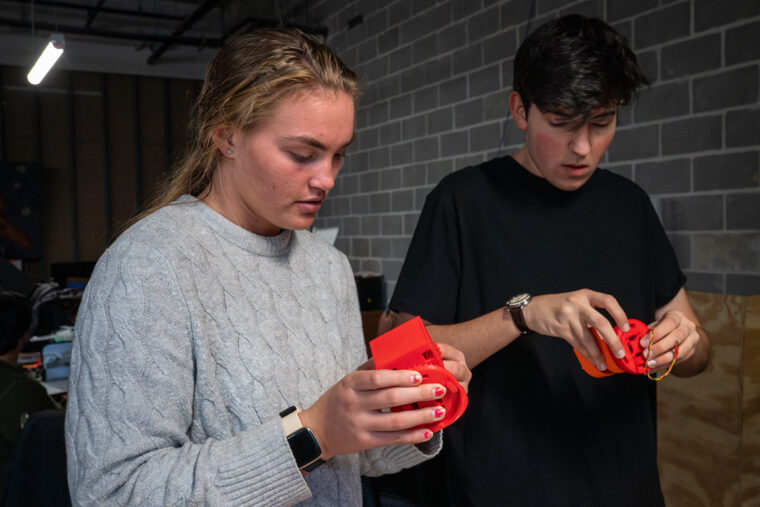
- SWARM students are pioneering advancements in modular robotics, showcasing the potential for collaborative design and functionality.
- Their innovative approach emphasizes the integration of electrical, mechanical, and software engineering disciplines, reflecting a holistic educational model.
- This initiative not only enhances technical skills among students but also positions them at the forefront of emerging technologies in robotics.
The current landscape of robotics is rapidly evolving, and the work being done by SWARM students is a testament to the transformative potential of modular robotics. As industries increasingly seek adaptable and efficient robotic solutions, the students' focus on modular designs allows for greater flexibility and scalability in robotic applications. This is particularly relevant now, as the demand for innovative automation solutions continues to rise across various sectors, from manufacturing to healthcare.
SWARM, a collaborative student organization, has brought together talents from electrical, mechanical, and software engineering disciplines to push the boundaries of what modular robotics can achieve. By integrating these diverse fields, the team is not only enhancing their own educational experiences but also creating robots that can be easily reconfigured for different tasks. This modularity is crucial in addressing the dynamic needs of modern industries, where the ability to adapt quickly can provide a significant competitive advantage.
The students' work exemplifies a hands-on approach to learning, where theoretical knowledge is applied to real-world challenges. Their projects involve designing and building robots that can work together, sharing tasks and resources in a way that mimics natural systems. This collaborative aspect of their robotics projects not only fosters teamwork and communication skills among the students but also reflects a growing trend in robotics toward systems that can operate in unison, enhancing overall efficiency and functionality.
As SWARM continues to innovate, the implications of their work extend beyond the classroom. The skills and experiences gained through these projects will prepare students for careers in a rapidly changing technological landscape, where modular robotics is likely to play a pivotal role. By leading in this area, SWARM members are not just contributing to their own educational journeys; they are also positioning themselves as future leaders in the field of robotics, ready to tackle the challenges and opportunities that lie ahead.