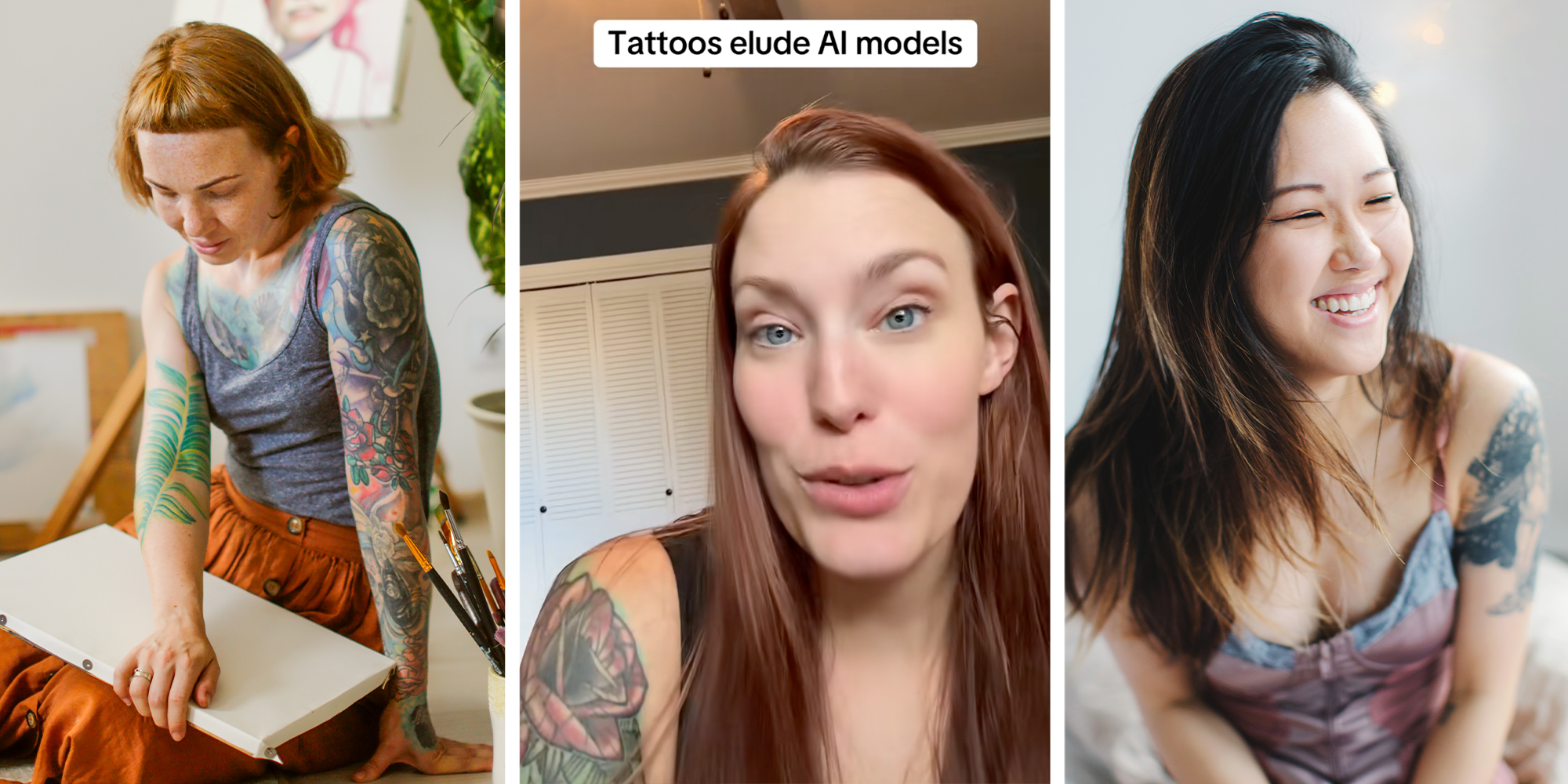
The rise of artificial intelligence has sparked significant concern over its potential to replicate human likenesses, leading to fears of identity theft and misuse. Amidst these anxieties, TikTok creator Ashleigh (@thatrealtor) has identified an unexpected safeguard: tattoos. In her viral video, she argues that the distinctiveness of her body art complicates AI's ability to create an accurate digital twin. Ashleigh notes that while AI-generated images may attempt to replicate her tattoos, the results often appear sloppy and unconvincing, serving as a clear indicator that the likeness is artificial. This perspective highlights a unique intersection of personal expression and technological vulnerability, suggesting that tattoos may provide a form of protection against AI impersonation.
The insights shared by Ashleigh resonate with a growing number of social media users who have observed similar discrepancies in AI-generated representations of tattooed individuals. While some argue that feeding more images into AI models could improve accuracy, the current limitations of the technology present a compelling case for the protective value of tattoos. As viewers engage with this idea, many express a newfound appreciation for body art as a means of safeguarding their identity. The conversation underscores a broader implication: as AI continues to evolve, the unique characteristics of human bodies, such as tattoos and other markings, may become increasingly significant in the ongoing discourse about digital identity and authenticity.