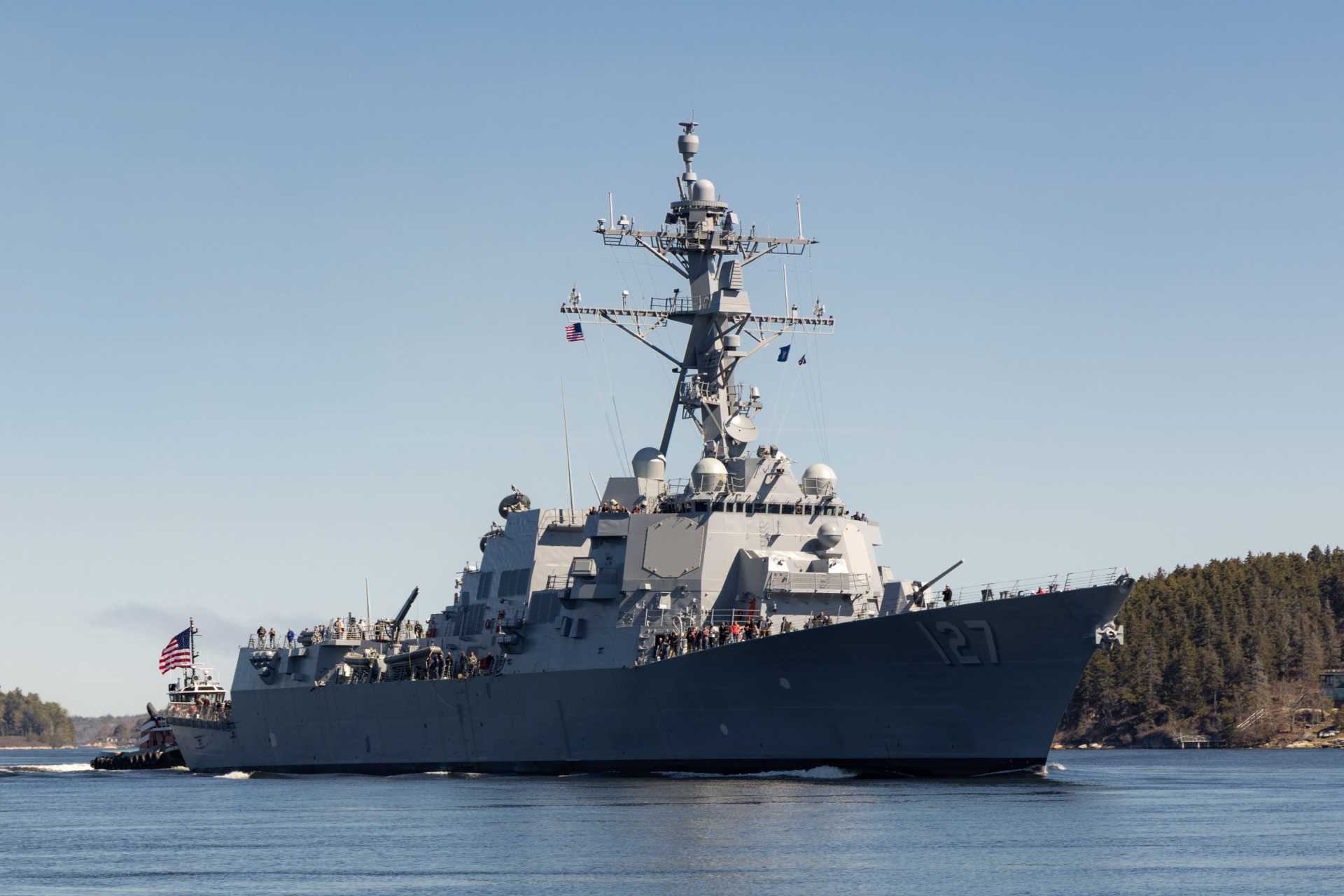
- The USS Patrick Gallagher has commenced sea trials, marking a pivotal moment in the U.S. Navy's transition from Flight IIA to Flight III destroyers.
- This final Flight IIA destroyer underscores the Navy's commitment to maintaining a robust fleet amid evolving technological demands.
- The successful completion of these trials is crucial for the acceptance of the vessel and the ongoing modernization of naval capabilities.
The initiation of sea trials for the USS Patrick Gallagher (DDG-127) is a significant event for the U.S. Navy, representing not only the last of the Flight IIA Arleigh Burke-class destroyers but also a critical juncture in the Navy's modernization efforts. As the service prepares to transition to the more advanced Flight III destroyers, the successful validation of the Gallagher's capabilities during these trials is essential to ensure that the fleet remains operationally effective in a period marked by increasing demands for naval presence and advanced combat capabilities.
The USS Patrick Gallagher departed from the shipyard and entered open waters to undergo rigorous performance assessments, which are vital for confirming that the ship meets the Navy's combat-ready standards. These trials focus on validating key operational parameters such as propulsion, maneuverability, and system integration under realistic conditions. The Gallagher's performance will be scrutinized to ensure it can fulfill its role as a multi-mission surface combatant, equipped with a robust Aegis combat system and 96 vertical launch cells, which enhance fleet firepower and interoperability during this transitional phase.
The trials are being conducted under the supervision of personnel from General Dynamics Bath Iron Works, reflecting a pre-delivery phase where the ship is operated by builders rather than Navy crews. This approach allows for a detailed examination of the ship's systems and performance, ensuring that any deficiencies can be identified and addressed before the vessel is formally accepted by the Navy. The testing regimen includes a series of standardized evaluations designed to measure speed, maneuverability, and endurance, as well as the integration of various systems under operational loads.
As the USS Patrick Gallagher undergoes these critical assessments, it is essential to recognize its role as a bridge between the established Flight IIA configuration and the upcoming Flight III standard. The Gallagher retains many of the proven capabilities of its predecessors while incorporating necessary upgrades to computing architecture and system integration. This transitional design is crucial for maintaining the Navy's operational readiness and ensuring that the fleet can adapt to emerging threats and technological advancements.