
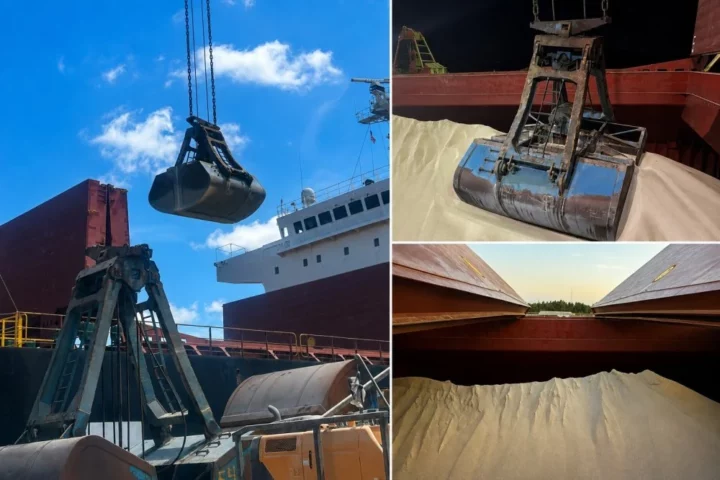
- The U.S. has lifted fertilizer restrictions on Morocco, signaling a strategic pivot to enhance supply chain resilience in the face of competition with China.
- Morocco's potential as a key supplier of purified phosphoric acid could significantly impact the U.S. electric vehicle (EV) battery market.
- This development underscores the broader geopolitical implications of securing critical minerals necessary for advanced manufacturing and energy transition.
The recent easing of fertilizer restrictions on Morocco by the United States is not merely a response to an agricultural supply emergency; it represents a strategic maneuver to bolster America's competitive edge against China in the burgeoning electric vehicle (EV) battery sector. As the global demand for EVs surges, the need for reliable sources of critical minerals, particularly purified phosphoric acid, has become paramount. This shift highlights the intricate interplay between agricultural policy and high-tech manufacturing, where securing essential materials can dictate market leadership and technological advancement.
The Washington Institute for Near East Policy emphasizes that Morocco's role as a potential key supplier of purified phosphoric acid could reshape the landscape of battery production in the U.S. This mineral is integral to the manufacturing of lithium-ion batteries, which are at the heart of the EV revolution. By establishing a more robust supply chain with Morocco, the U.S. not only mitigates its reliance on Chinese sources but also enhances its capacity to produce batteries domestically, thereby fostering economic growth and job creation in the clean technology sector.
This strategic pivot is particularly significant given the ongoing geopolitical tensions and trade disputes between the U.S. and China. As China continues to dominate the supply chains for critical minerals, the U.S. must act decisively to secure alternative sources. The partnership with Morocco could serve as a model for future collaborations with other nations rich in essential resources, thereby diversifying supply chains and reducing vulnerabilities associated with over-reliance on a single country.
Moreover, the implications of this development extend beyond immediate economic benefits; they resonate with broader themes of national security and technological independence. By investing in partnerships that enhance access to critical minerals, the U.S. is not only positioning itself to compete more effectively in the EV market but also reinforcing its strategic autonomy in a rapidly evolving global landscape. This move signals a clear recognition of the importance of resource security in achieving long-term sustainability and competitiveness in the clean energy transition.







