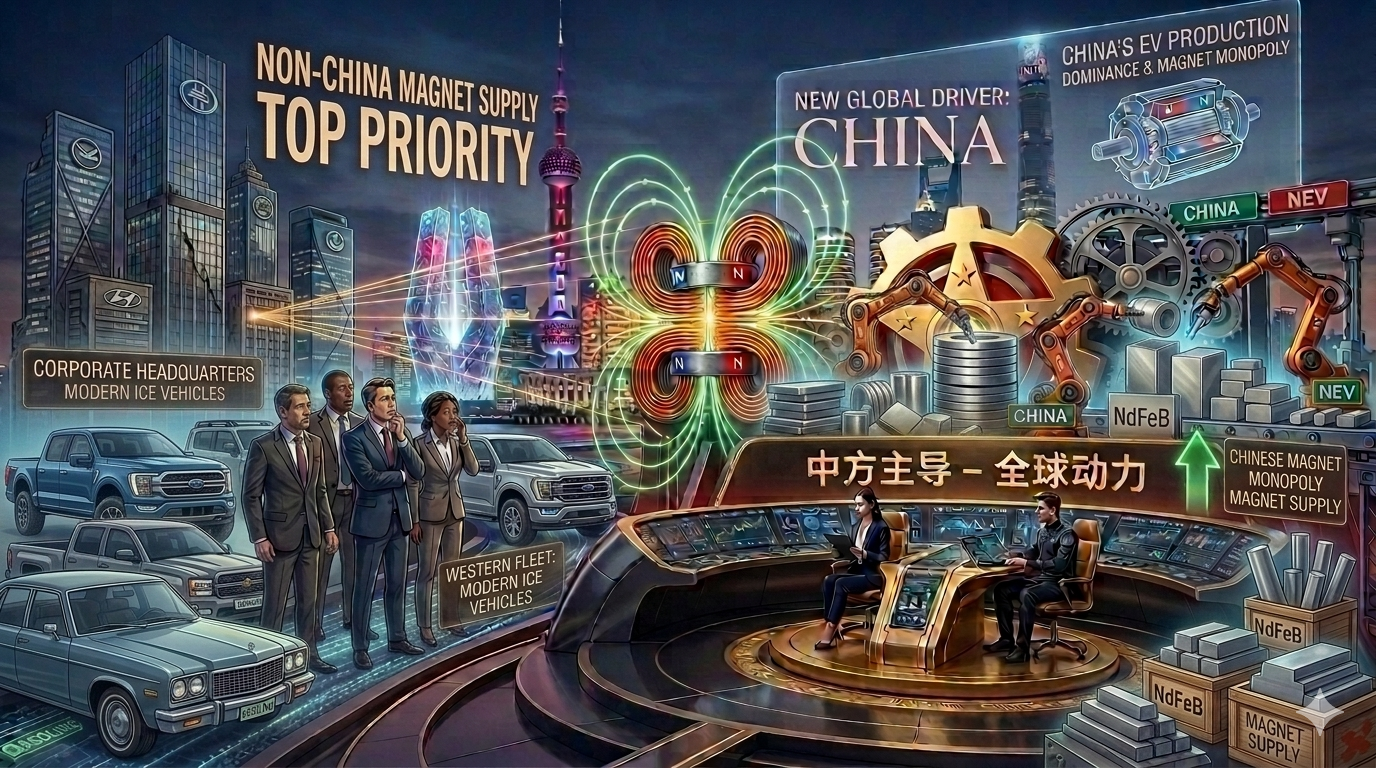
- China's dominance in the supply of critical magnets poses an imminent threat to Western auto manufacturing capabilities.
- Current geopolitical tensions and supply chain vulnerabilities highlight the urgent need for diversification in sourcing materials.
- Without immediate action, the Western automotive industry risks significant production disruptions that could impact market competitiveness.
The urgency surrounding the supply chain for electric vehicle (EV) components has reached a critical juncture, particularly due to China's control over essential magnet supplies. As the automotive industry pivots towards electrification, the reliance on these magnets—integral for electric motors and batteries—has never been more pronounced. The looming threat of supply constraints could halt Western auto manufacturing within weeks, underscoring the fragility of current supply chains and the geopolitical risks that accompany them. This situation demands immediate attention from industry leaders and policymakers alike, as the implications extend far beyond mere production delays; they could reshape the competitive landscape of the global automotive market.
The situation has escalated as tensions between the U.S. and China continue to rise, with the latter's grip on rare earth elements and magnets becoming a focal point of concern. The automotive sector, heavily invested in transitioning to electric vehicles, is particularly vulnerable to these supply chain disruptions. The potential for a sudden halt in production not only threatens the viability of existing manufacturing operations but also jeopardizes the ambitious timelines set by many automakers to electrify their fleets. This scenario highlights the critical need for Western manufacturers to reassess their sourcing strategies and consider alternative supply chains to mitigate risks.
In light of these developments, the implications for the Western automotive industry are profound. Automakers must prioritize the establishment of diversified supply chains that reduce dependency on any single country, particularly one with geopolitical tensions. This may involve investing in domestic production capabilities or forging new partnerships with countries that can provide reliable access to critical materials. The urgency of this transition cannot be overstated; failure to act could result in significant production slowdowns, loss of market share, and diminished competitiveness against not only Chinese manufacturers but also other global players who may be less affected by these supply constraints.
Ultimately, the real fear is not merely the competition from Chinese electric vehicles but the potential for a supply chain crisis that could stifle innovation and growth within the Western automotive sector. As the industry grapples with these challenges, it must also remain vigilant in its efforts to advocate for policies that support domestic production and secure access to essential materials. The time for decisive action is now, as the future of the automotive landscape hangs in the balance.