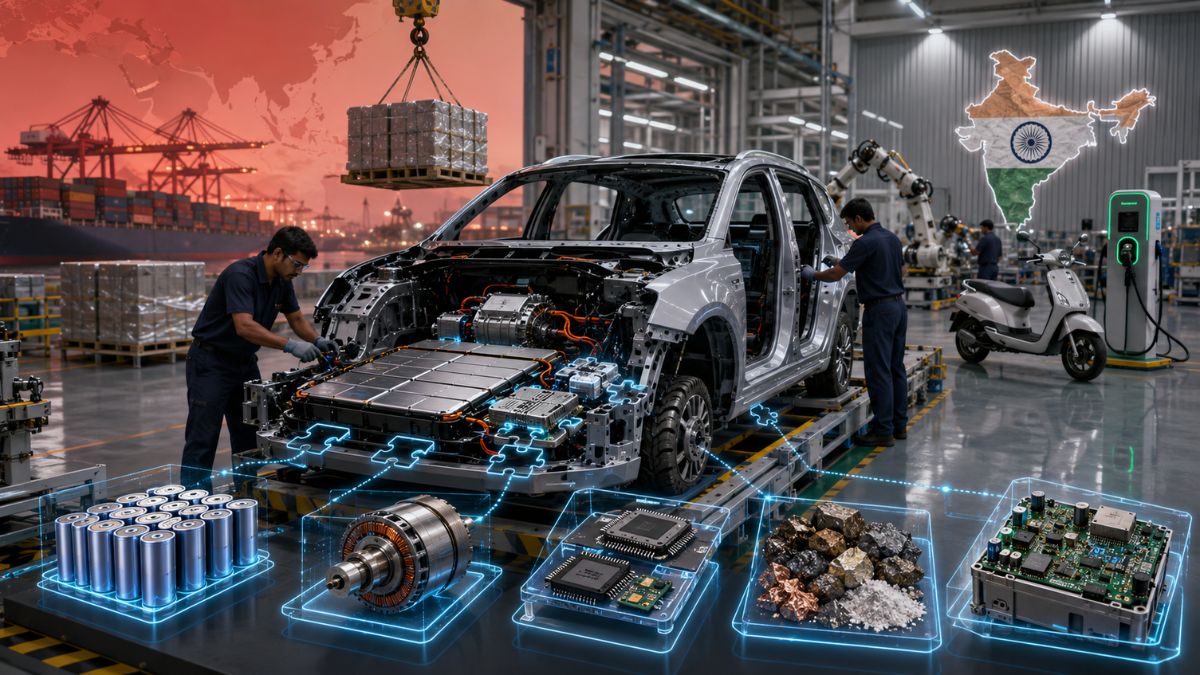
- India's electric vehicle (EV) industry is growing quickly, yet it is still significantly reliant on China for essential components and technologies.
- Localization initiatives are underway, but their current scope and impact are insufficient to reduce dependency on foreign suppliers.
- The situation underscores the need for strategic investments and policy support to build a self-sufficient EV ecosystem in India.
The urgency of India's electric vehicle (EV) transition cannot be overstated, particularly as the country aims to reduce its carbon footprint and enhance energy security. However, the current landscape reveals a troubling reliance on China for critical technologies, including battery cells, rare-earth magnets, and power electronics. This dependency not only poses risks to supply chain stability but also hinders India's ambitions to establish a robust and self-sufficient EV ecosystem. As the global demand for EVs surges, India must address these vulnerabilities to ensure its position in the rapidly evolving automotive market.
Despite the rapid assembly of EVs in India, the localization efforts remain limited. The country is making strides in developing its own manufacturing capabilities, yet the pace and scale of these initiatives are not sufficient to meet the growing demand for EV components. The reliance on imported technologies from China highlights a critical gap in India's strategy, as the nation seeks to position itself as a leader in the EV sector. Without significant investments in domestic production and innovation, India risks falling behind in the global EV race.
The implications of this dependency are profound. As the Indian government pushes for increased adoption of EVs through various incentives and policies, the lack of local manufacturing capabilities could undermine these efforts. The need for a comprehensive approach that includes not only financial incentives but also strategic partnerships and investments in research and development is paramount. By fostering a more resilient supply chain and enhancing local production capabilities, India can mitigate risks associated with foreign dependency and strengthen its EV market.
In conclusion, while India is making commendable progress in its EV journey, the current reliance on China for essential technologies poses significant challenges. The ongoing localization efforts must be accelerated and expanded to build a sustainable and self-reliant EV ecosystem. This will require a concerted effort from both the government and private sector to invest in innovation, infrastructure, and workforce development, ensuring that India can fully capitalize on the opportunities presented by the global shift towards electric mobility.