- The exponential growth of robotics publications poses a significant challenge to maintaining interdisciplinary connections within the field.
- Large language models (LLMs) offer potential efficiencies in literature review but also introduce risks of misrepresentation and superficial understanding.
- Radical proposals for rethinking peer review, including community evaluation and abandoning traditional models, highlight the urgent need for innovative solutions to the publication deluge.
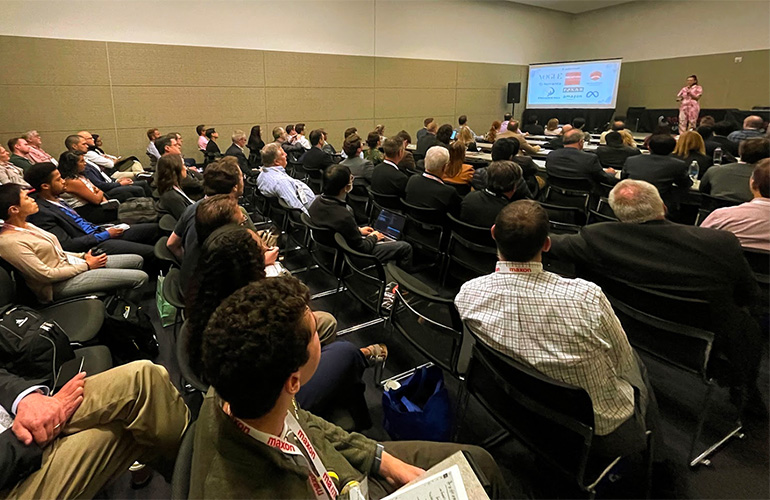
The current landscape of robotics research is facing a critical juncture, as the sheer volume of published papers threatens to overwhelm the field's integrative nature. The ICRA panel discussion, “Surviving the Paper Deluge,” underscores the urgency of addressing this issue, with projections indicating that by 2025, approximately 70,000 papers will include the term “robotics.” This rapid increase not only complicates the ability of researchers to stay informed across diverse subfields but also risks fragmenting the discipline into isolated silos, undermining its foundational strength of cross-domain connectivity.
Panel chair Aude Billard emphasized the unique challenges of robotics, where the integration of various components—such as perception, control, and safety—is essential for innovation. Kunpeng Yao's case study revealed that out of 347 papers reviewed in a specific subfield, only 20 percent were deemed to make significant contributions. This highlights a troubling trend where many publications may merely repackage existing ideas without advancing the field. The distinction between true innovation and superficial novelty is critical; researchers must focus on substantial contributions rather than being swayed by the allure of new terminology.
The discussion also delved into the role of large language models in literature review processes. While Nadia Figueroa pointed out that LLMs can streamline tasks like search and summarization, they also pose significant risks, particularly in terms of "hallucination." This phenomenon can lead to misinterpretations of existing research, potentially resulting in a proliferation of poorly understood concepts. The danger lies not in the presence of fake citations but in the outsourcing of critical cognitive processes, which could lead to a generation of researchers who produce more text without a corresponding depth of understanding.
Amidst these challenges, panelists proposed various strategies for reforming the peer review process. Renaud Detry suggested that the current evaluation mechanisms fail to adequately differentiate between the diverse types of contributions in robotics. This lack of clarity can lead to inappropriate comparisons and evaluations, further complicating the landscape. Shigeki Sugano's radical proposition to abandon traditional peer review in favor of community-driven evaluation raises important questions about the future of academic publishing. While this model could democratize visibility and recognition, it also risks flooding the system with low-quality work, underscoring the need for a balanced approach that maintains rigorous standards while adapting to the realities of a rapidly evolving field.
Ultimately, the panel's insights reveal a complex interplay of factors contributing to the publication deluge in robotics. While the increase in accessible research can lower barriers for newcomers and diversify voices within the field, it also raises concerns about the potential for siloed knowledge and the dilution of foundational understanding. As the community grapples with these challenges, the call for innovative solutions—whether through improved peer review practices or the strategic use of LLMs—becomes increasingly urgent. The future of robotics research hinges on the ability to navigate this deluge effectively, ensuring that the field remains cohesive and innovative in the face of overwhelming volume.