
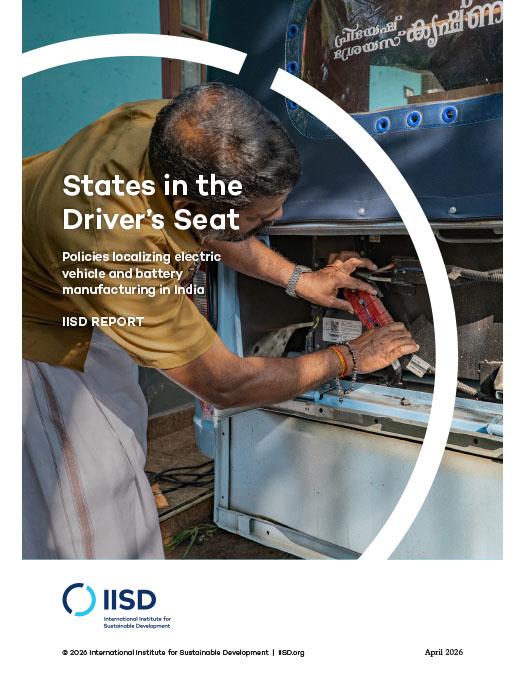
- States in India are taking a proactive role in shaping the electric vehicle and battery manufacturing landscape, indicating a shift towards localized policy frameworks.
- The report highlights the diverse strategies employed by different states, reflecting their unique economic contexts and priorities.
- This decentralized approach may accelerate the transition to electric mobility, but it also poses challenges in terms of standardization and coordination across regions.
The urgency of transitioning to electric vehicles (EVs) and enhancing battery manufacturing capabilities in India has never been more pronounced, especially as global markets pivot towards sustainability. The report sheds light on how 14 major automotive states are stepping up to the plate, crafting tailored policies that not only promote EV adoption but also stimulate local economies through battery manufacturing. This localized policy-making is crucial as it allows states to leverage their specific strengths, whether in terms of resources, infrastructure, or workforce capabilities, to foster a conducive environment for EV growth.
What emerges from the analysis is a mosaic of strategies that vary significantly from one state to another. Some states are offering substantial financial incentives to manufacturers, while others are focusing on developing robust charging infrastructure or investing in research and development. This diversity in approaches reflects the unique economic landscapes and priorities of each state, which could lead to innovative solutions tailored to local needs. However, this also raises questions about the coherence of the national EV strategy, as disparate policies could lead to fragmentation in the market.
The implications of this decentralized approach are profound. On one hand, it could accelerate the adoption of electric mobility by allowing states to experiment with different models and learn from each other's successes and failures. On the other hand, the lack of a unified framework may hinder the establishment of standardized practices and technologies, which are essential for scaling up production and ensuring interoperability across regions. As states compete to attract investment and talent, there is a risk that some may prioritize short-term gains over long-term sustainability, potentially undermining the overall goals of the national EV initiative.
In conclusion, while the proactive stance of Indian states in the EV and battery manufacturing sector is commendable, it necessitates careful navigation to balance local autonomy with the need for a cohesive national strategy. The report underscores the importance of fostering collaboration among states to share best practices and align policies, ensuring that the transition to electric mobility is not only swift but also sustainable and equitable across the country. As the landscape continues to evolve, the interplay between state-level initiatives and national objectives will be critical in determining the success of India's electric vehicle ambitions.







