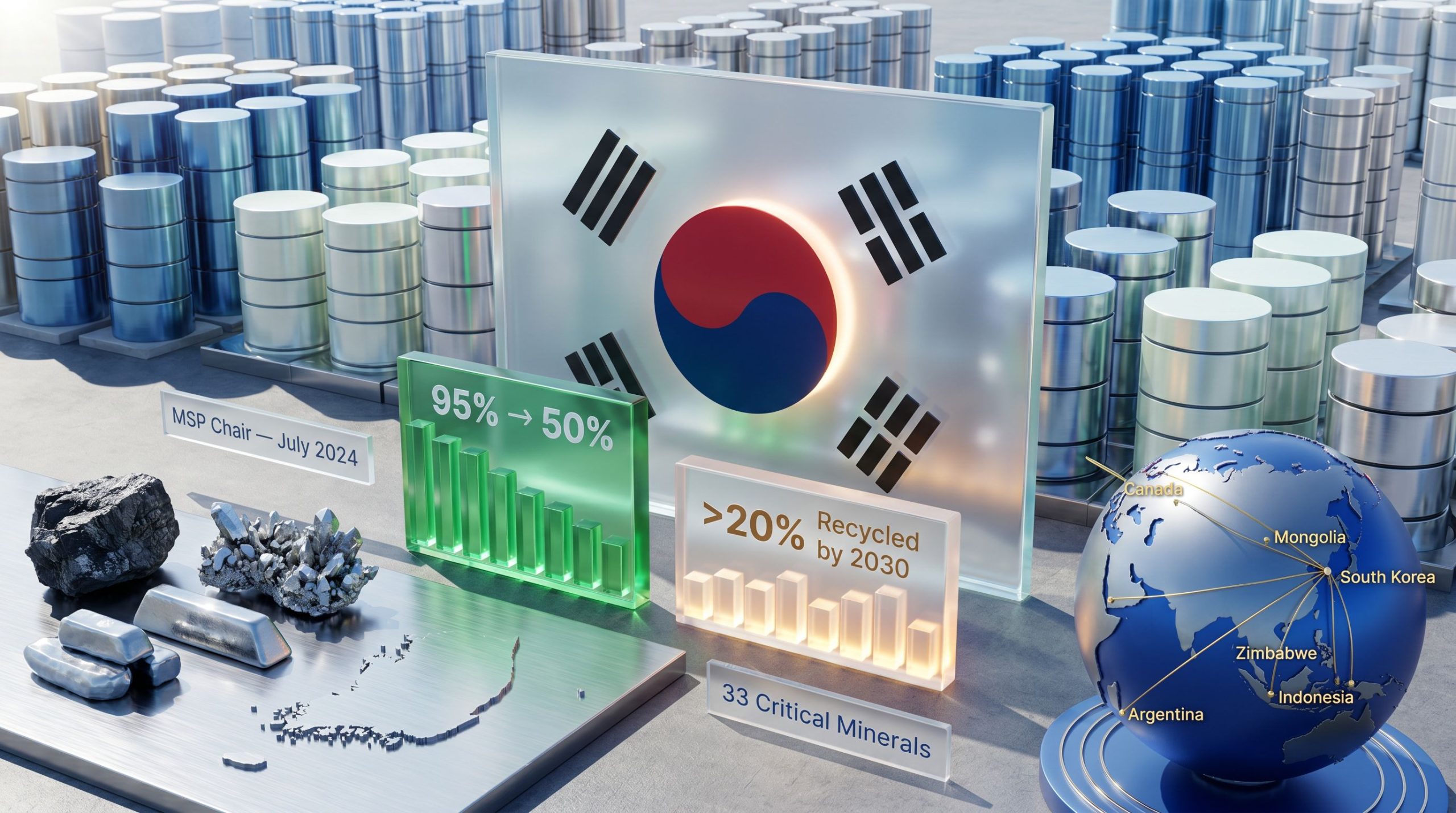
- South Korea aims to reduce its dependency on critical mineral imports by 50% by 2030, highlighting a strategic pivot towards domestic sourcing and recycling.
- The strategy emphasizes partnerships with resource-rich nations to secure supply chains, reflecting a proactive approach to geopolitical risks.
- By focusing on critical minerals, South Korea positions itself to enhance its technological capabilities and bolster its energy transition efforts.
The urgency of South Korea's critical minerals strategy cannot be overstated, as global supply chain vulnerabilities have become increasingly apparent in recent years. The nation’s commitment to reducing its import dependency by 50% by 2030 signals a significant shift in policy aimed at enhancing resilience against geopolitical tensions and market fluctuations. This initiative is not merely a response to current challenges; it is a forward-looking strategy that seeks to fortify South Korea's position in the global economy, particularly in sectors reliant on critical minerals such as electric vehicles and renewable energy technologies.
To achieve this ambitious goal, South Korea is prioritizing partnerships with countries rich in critical mineral resources. This approach reflects a recognition of the interconnected nature of global supply chains and the need for collaborative efforts to secure essential materials. By fostering these international relationships, South Korea aims to mitigate risks associated with over-reliance on a limited number of suppliers, particularly in light of recent disruptions that have affected the availability of key minerals. This strategy not only enhances supply chain security but also positions South Korea as a key player in the global race for critical resources.
In addition to international partnerships, South Korea is placing a strong emphasis on recycling as a means to bolster its domestic supply of critical minerals. This dual approach—combining import reduction with increased recycling efforts—demonstrates a comprehensive understanding of the complexities involved in securing mineral supplies. By investing in recycling technologies and infrastructure, South Korea can reduce waste and create a more circular economy, which is essential for sustainable development. This focus on recycling not only addresses immediate supply concerns but also aligns with broader environmental goals, reinforcing the nation’s commitment to sustainability.
Ultimately, South Korea's critical minerals strategy is a multifaceted initiative that seeks to enhance supply chain resilience while promoting technological advancement and sustainability. The implications of this strategy extend beyond national borders, as it may influence global market dynamics and the geopolitical landscape surrounding critical minerals. As countries around the world grapple with similar challenges, South Korea's proactive measures could serve as a model for others seeking to navigate the complexities of resource dependency in an increasingly interconnected world.