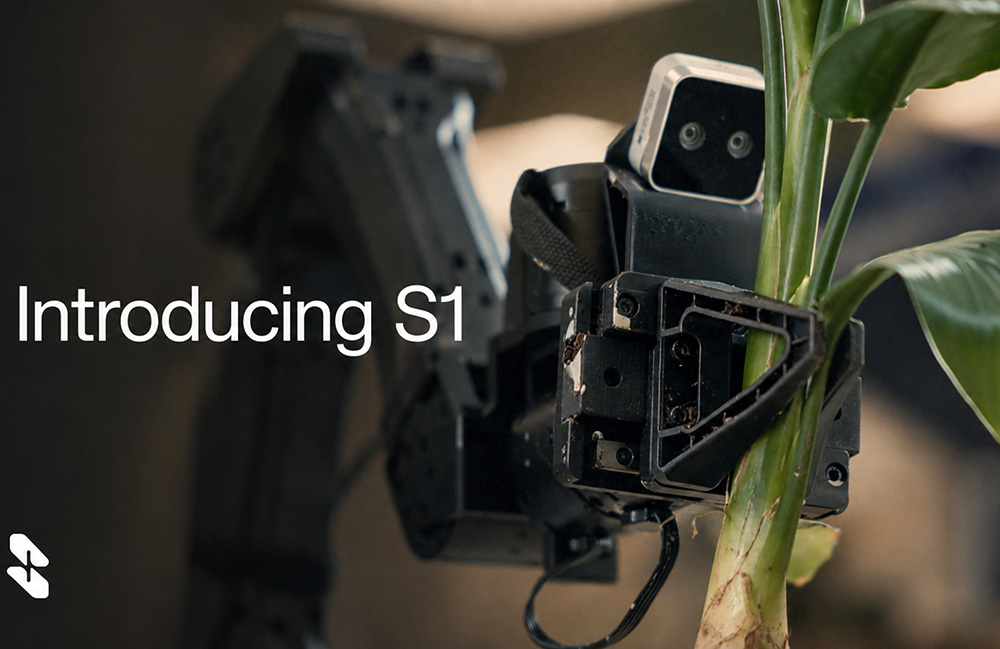
- Skild AI's S1 model introduces in-context learning, allowing robots to learn complex tasks from a single video demonstration.
- The model leverages diverse training data sources, including teleoperation, human videos, simulation, and data-capture gloves, to enhance learning efficiency.
- While Skild AI is not yet ready for widespread home deployment, the S1 model represents a significant step towards a transformative moment in robotics akin to the emergence of ChatGPT in language processing.
The unveiling of Skild AI's S1 model is a pivotal moment in the robotics landscape, as it promises to revolutionize how robots learn and adapt to new tasks. With nearly $1.7 billion raised since its inception in 2023, Skild AI is positioned to push the boundaries of robotic capabilities. The S1 model's ability to learn complex tasks from a single video input marks a significant advancement in the field, suggesting a shift towards more intuitive and efficient robotic learning processes that could accelerate the adoption of robotics across various industries.
Skild AI's approach to training the S1 model is multifaceted, utilizing a combination of four distinct data types: teleoperation data, human videos, simulation, and data-capture gloves. This comprehensive strategy addresses the limitations inherent in relying on a single data source, as each type brings unique strengths and weaknesses. For instance, while teleoperation data is high quality, it is slow to gather and lacks diversity; human videos, on the other hand, offer abundant examples but are challenging to translate directly into robotic actions. By integrating these diverse data sources, Skild AI enhances the pre-training process, allowing the S1 model to learn more effectively and efficiently.
Currently, Skild AI is not narrowing its focus to specific tasks or industries, instead opting for a generalized approach that encompasses a wide range of applications. The S1 model is designed to handle longer, more complex tasks, such as cooking or gardening, which require a higher level of adaptability and learning. This capability was exemplified when the robot successfully flipped a pancake, a task it had never encountered before, demonstrating the model's ability to infer actions from observed movements. Such versatility is crucial for the future of robotics, as it allows for broader applications and more sophisticated interactions with human environments.
While the advancements represented by the S1 model are significant, Deepak Pathak, co-founder and CEO of Skild AI, cautions that the technology is not yet ready for home deployment. He draws parallels between the evolution of robotics and the transformative impact of ChatGPT on language models, suggesting that while S1 is a step in the right direction, the field has yet to reach its full potential. Looking ahead, Skild AI plans to prioritize deployment alongside ongoing research, particularly following its acquisition of Fetch Robotics, which will bolster its capabilities in scaling and deploying robotic solutions effectively.