- Skild AI's acquisition of Zebra Technologies' robotics division marks a strategic shift towards integrating AI with industrial automation, aiming to create a unified fulfillment ecosystem.
- The move signals a departure from traditional task-specific robotics, focusing instead on a versatile intelligence layer capable of managing diverse robotic systems.
- Skild's plans to enhance existing Fetch Robotics products and develop a robust data flywheel could redefine productivity in the logistics sector.
The acquisition of Zebra Technologies' robotics division by Skild AI is a pivotal moment in the evolution of industrial automation, particularly as the logistics sector increasingly seeks integrated solutions that enhance efficiency and adaptability. By acquiring the assets of Fetch Robotics, Skild is positioning itself to leverage its hardware-agnostic AI capabilities, which are designed to operate across various robotic platforms. This strategic move not only aims to streamline operations but also to create a self-reinforcing data flywheel that could significantly boost productivity in the multi-billion-dollar logistics and third-party logistics (3PL) industries.
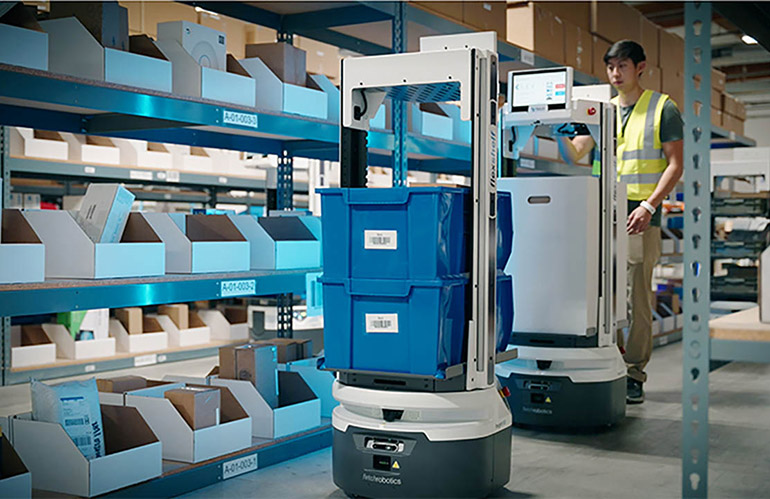
Skild's integration of its AI "brain" with Zebra's established Symmetry orchestration platform is a critical component of this acquisition. The goal is to eliminate human bottlenecks in the fulfillment pipeline, transitioning from a brittle, task-oriented approach to a more cohesive and autonomous system. This shift is underscored by Skild's commitment to supporting the existing Fetch/Zebra installed base while also enhancing the capabilities of Fetch robots through the integration of the Skild Brain. Such enhancements are expected to open up new avenues for advanced manipulation solutions within warehouse environments.
As Skild embarks on this journey, the company is also focused on developing its "data flywheel," which is essential for training AI world models. The Skild Brain is designed to adapt to physical changes in robots without requiring extensive retraining, which is a significant advantage in dynamic environments. The phased rollout strategy—beginning with predictable environments and gradually moving to more complex settings—demonstrates Skild's methodical approach to scaling its technology and ensuring that its AI can gather the necessary data to improve performance.
However, the future of the Fetch autonomous mobile robot (AMR) platform remains uncertain. While Skild is keen on continuing the development of the Symmetry software and integrating it with its AI, it has not clarified whether it will further develop the Fetch AMR platform. This ambiguity raises questions about the long-term viability of Fetch's existing products and the potential impact on the workforce, especially considering the reported brain drain following Zebra's announcement to wind down the Fetch division. As Skild moves forward, it must navigate these challenges while capitalizing on the strengths of its new assets to redefine the landscape of warehouse automation.