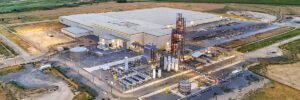
Sila has initiated operations at its new large-scale silicon anode manufacturing facility in Moses Lake, Washington, a significant step towards enhancing the domestic electric vehicle (EV) battery supply chain. This 600,000-square-foot plant is pivotal for transitioning silicon anode technology from experimental stages to commercial production, targeting EV manufacturers and other battery-dependent industries. The facility's primary output will be Titan Silicon, a silicon-carbon anode material that promises a 20 percent increase in energy density over traditional graphite-based batteries and facilitates charging speeds that are twice as fast. With an initial capacity of two to five gigawatt-hours (GWh) and the potential for expansion to 250 GWh within five years, Sila is poised to make a substantial impact on the EV market.
The strategic location of the plant, which utilizes clean hydropower from the Columbia River, underscores Sila's commitment to sustainability and environmental responsibility. By integrating advanced safety and quality systems, the facility aims to ensure consistent production of Titan Silicon, thereby bridging the gap between innovation and manufacturing in the U.S. Gene Berdichevsky, CEO and Co-Founder of Sila, emphasizes that this initiative transcends mere factory construction; it represents a crucial advancement in domestic battery technology. As the demand for efficient and sustainable energy solutions grows, Sila's efforts could redefine the landscape of EV battery production and contribute significantly to the industry's evolution.