- Ottonomy has launched the Ottumn.AI platform, which integrates various robotic systems and smart infrastructure to enhance operational efficiency in healthcare, manufacturing, and e-commerce.
- The platform employs a "neurosymbolic" AI approach, combining perception and symbolic reasoning to ensure safe and effective navigation in complex environments.
- Strategic partnerships with Arrive AI and Skye Air Mobility bolster the platform's capabilities, enabling asynchronous deliveries and addressing labor shortages in logistics.
The introduction of Ottumn.AI by Ottonomy at the India AI Summit marks a significant advancement in the orchestration of autonomous systems, particularly in light of increasing demands for efficiency and reliability in logistics and healthcare. As industries grapple with labor shortages and the need for streamlined operations, the platform promises to bridge the last-mile delivery gap by connecting disparate robotic systems into a cohesive network. This integration is not merely a technological upgrade; it represents a paradigm shift towards orchestrated autonomy, where robots and drones operate in harmony with smart infrastructure, enhancing service delivery in real-time environments.
Ottumn.AI is built on NVIDIA's AI infrastructure, leveraging cutting-edge technologies to create a cloud-based platform that facilitates the safe and scalable operation of various robotic entities. The orchestration framework is designed to connect drones, cleaning robots, and patrolling robots with infrastructure elements like smart mailboxes and building systems. This capability is crucial for environments such as hospitals and urban campuses, where efficient and safe delivery of goods is paramount. The platform's architecture, which includes edge intelligence and cloud orchestration, allows for rapid decision-making and real-time coordination, essential for navigating complex physical spaces.
The platform's "neurosymbolic" approach is particularly noteworthy, as it combines advanced AI techniques with symbolic logic to enhance robots' perception and cognitive abilities. This dual capability ensures that robots can not only interpret their surroundings but also adhere to strict safety and operational protocols. By complying with the VDA 5050 standard for AGV interoperability, Ottumn.AI positions itself as a versatile solution that can integrate with existing robotic systems, thereby preventing vendor lock-in and facilitating easier scalability for businesses. This interoperability is critical as it allows for a mixed fleet of robots and drones to operate seamlessly, enhancing overall efficiency.
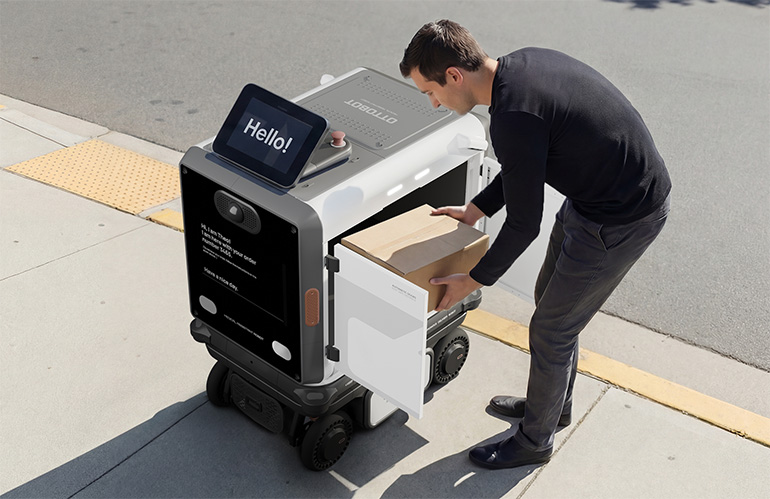
Strategic partnerships play a pivotal role in the functionality of Ottumn.AI. Collaborations with Arrive AI and Skye Air Mobility enable the platform to facilitate asynchronous deliveries, where goods can be picked up and dropped off without human intervention. This capability is particularly beneficial in healthcare settings, where time-sensitive deliveries of medical specimens can be managed autonomously. The integration of smart receptacles, which offer climate control and UV sterilization, further enhances the platform's utility in sensitive environments. Additionally, the partnership with Skye Air Mobility allows for efficient coordination between ground robots and drones, significantly reducing carbon emissions compared to traditional delivery methods.
As Ottonomy prepares to demonstrate Ottumn.AI at the upcoming India AI Summit, the implications of this technology extend beyond mere automation; they address pressing global needs for efficiency and sustainability in logistics. By uniting various robotic systems and smart infrastructure, Ottumn.AI not only enhances operational capabilities but also positions itself as a critical player in the future of urban automation. The platform's ability to adapt and optimize performance in real-time will be essential as industries continue to evolve in response to changing market demands and technological advancements.