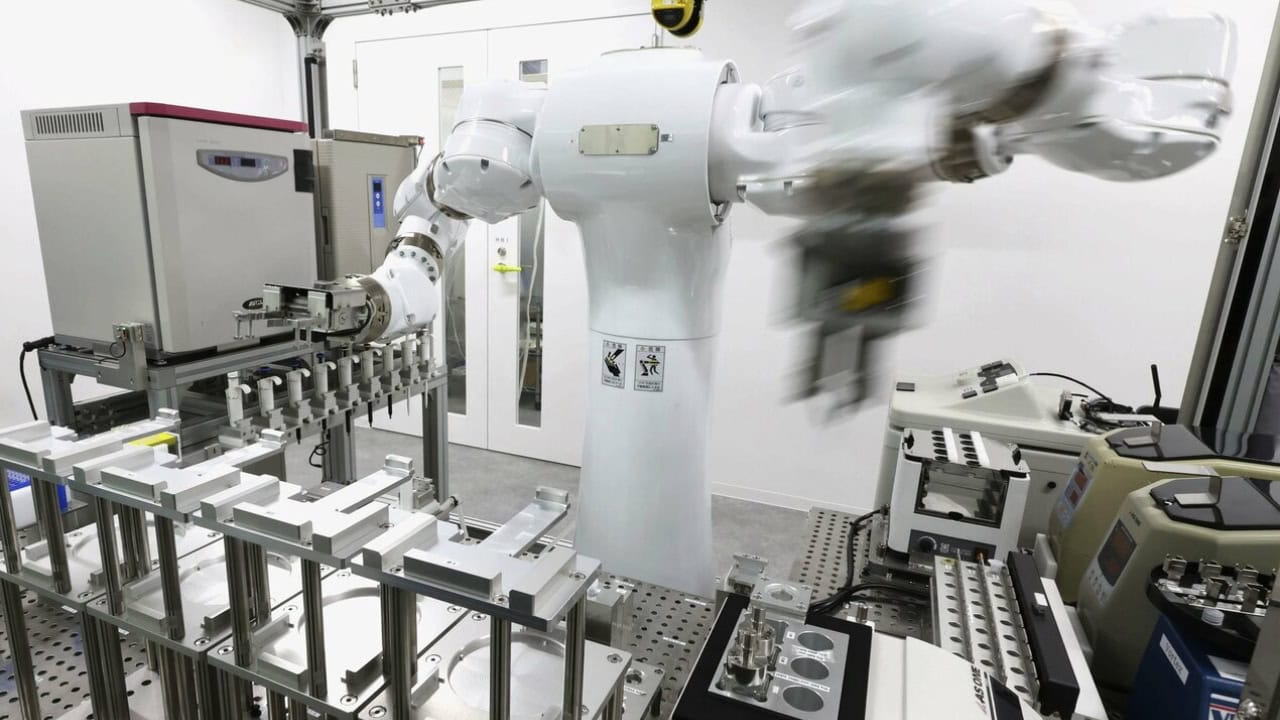
- Tokyo University has launched a fully automated robot laboratory, signaling a significant shift in how medical experiments can be conducted.
- The Maholo LabDroid will operate independently, highlighting advancements in robotics and AI capabilities.
- This initiative raises questions about the future role of human researchers in scientific experimentation.
The establishment of a fully automated robot laboratory at Tokyo University marks a pivotal moment in the intersection of robotics and medical research. As the Maholo LabDroid takes center stage, conducting experiments without any human oversight, it underscores a growing trend towards automation in scientific fields. This development is not merely a technological novelty; it represents a fundamental rethinking of how research can be performed, potentially increasing efficiency and precision while reducing human error.
The Maholo LabDroid's ability to operate autonomously is a testament to the advancements in robotics and artificial intelligence. By eliminating the need for human staff, the lab aims to streamline the experimental process, allowing for continuous operation and data collection without the limitations imposed by human presence. This shift could lead to faster research cycles and the ability to conduct more complex experiments that require high levels of precision and consistency, which are often challenging to achieve with human researchers involved.
However, the implications of this move extend beyond operational efficiency. The decision to create a robot-only environment raises critical questions about the future of human involvement in scientific research. As automation becomes more prevalent, there is a growing concern about the diminishing role of human researchers and the potential loss of critical thinking and creativity that humans bring to the scientific process. While robots can enhance productivity, they may also lead to a devaluation of human expertise in fields that have traditionally relied on human intuition and judgment.
This initiative by Tokyo University could serve as a model for other institutions considering similar paths. As the landscape of research continues to evolve, the balance between human and robotic contributions will need careful consideration. The success of the Maholo LabDroid may encourage further investment in robotic systems, potentially reshaping the future of medical research and experimentation. The implications of this shift will likely resonate throughout the scientific community, prompting discussions about the ethical, practical, and philosophical dimensions of a future where robots play an increasingly central role in research.