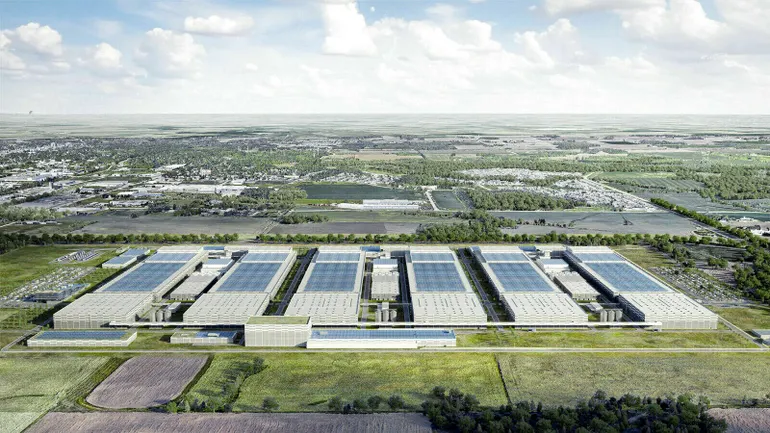
- Several significant electric vehicle (EV) battery supply-chain projects in Canada have been halted, raising concerns about the effectiveness of government subsidies.
- The cancellations highlight the fragility of the EV supply chain and the potential misalignment between government incentives and market realities.
- As Canada aims to position itself as a leader in the EV sector, these setbacks could undermine investor confidence and future project viability.
The recent suspension of major electric vehicle battery supply-chain projects in Canada underscores a critical juncture for the nation’s ambitions in the EV sector. As the government invests heavily in subsidies to stimulate growth, the abrupt halt of these initiatives raises urgent questions about the efficacy of such financial support and the overall health of the supply chain. This situation is particularly concerning as Canada seeks to establish itself as a key player in the global EV market, where competition is intensifying and the stakes are high for both economic and environmental outcomes.
Several high-profile projects, which were expected to bolster Canada’s position in the EV landscape, have been shelved, prompting scrutiny over the alignment of government subsidies with actual market needs. The cancellations suggest that despite substantial financial backing, the projects may have been overly optimistic or misaligned with the current capabilities of the supply chain. This misalignment not only jeopardizes the immediate prospects of these initiatives but also casts a shadow over future investments, as stakeholders reassess the viability of entering a market that appears increasingly unstable.
The implications of these halted projects extend beyond immediate economic concerns; they signal a potential loss of momentum in Canada’s broader strategy to attract and retain investment in clean technology. As the country lays the groundwork for new opportunities, the setbacks could deter potential investors who may view the current landscape as fraught with uncertainty. The government’s ability to effectively manage and adapt its subsidy programs in response to market realities will be crucial in restoring confidence and ensuring that future projects can succeed where others have faltered.
Ultimately, the fate of Canada’s EV ambitions hinges on its capacity to navigate these challenges and recalibrate its approach to supply chain development. The current situation serves as a stark reminder of the complexities involved in transitioning to a sustainable energy future, where government intervention must be carefully balanced with market dynamics. As Canada continues to pursue its vision for a robust EV sector, the lessons learned from these aborted projects will be vital in shaping a more resilient and responsive strategy moving forward.