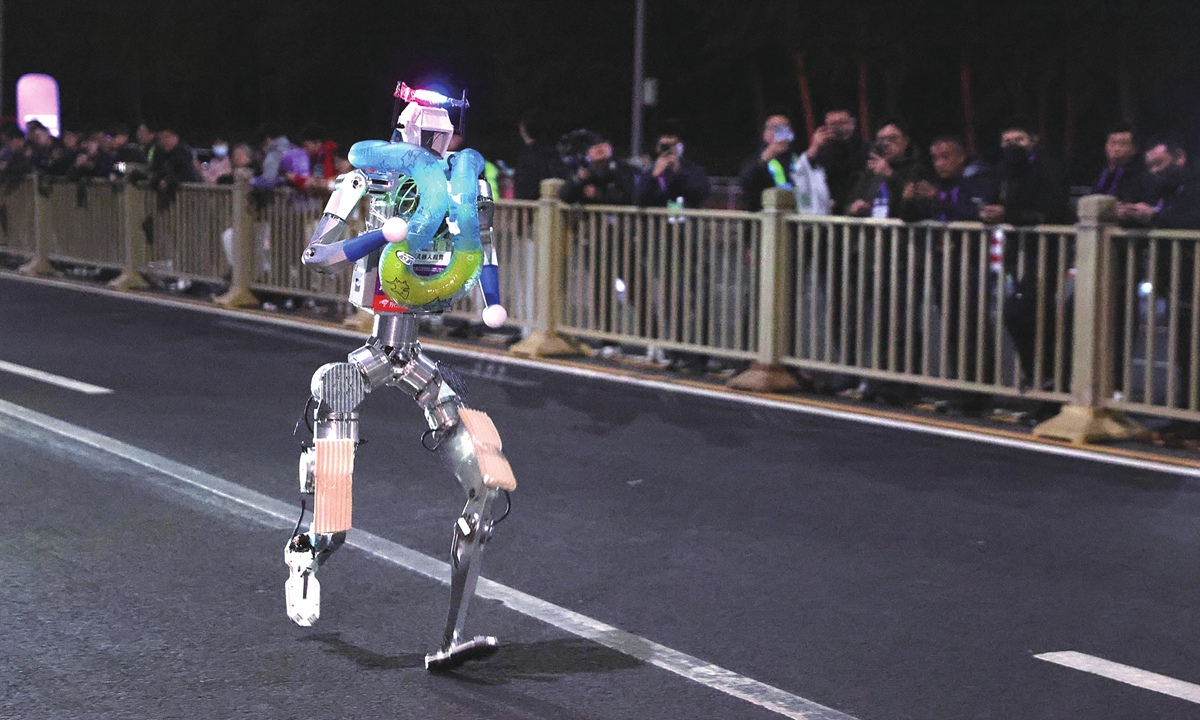
- The upcoming half-marathon in Beijing features humanoid robots, showcasing advancements in robotics and AI.
- China's robotics sector is rapidly evolving, with new products achieving impressive sprint speeds of 10 m/s.
- This event highlights the intersection of technology and athletics, signaling a growing interest in robotic capabilities in competitive environments.
The imminent half-marathon in Beijing is not just a sporting event; it represents a significant milestone in the integration of robotics into competitive athletics. As the city transitions from its bustling daytime activities to a quieter evening atmosphere, the rhythmic footsteps of humanoid robots training on the track underscore the rapid advancements in this field. This event, set to take place in the Beijing Economic-Technological Development Area (E-Town), is poised to attract attention not only for its novelty but also for what it signifies about the future of robotics and artificial intelligence in sports.
The training sessions leading up to the half-marathon have showcased robots that are not merely static displays of technology but dynamic competitors capable of impressive speeds. With some models achieving sprint speeds of 10 m/s, these robots exemplify the cutting-edge developments within China's robotics sector. This rapid evolution is indicative of a broader trend where robotics is increasingly viewed as a viable participant in athletic competitions, challenging traditional notions of what constitutes a competitor.
The implications of this event extend beyond the immediate spectacle of robots racing on a track. It signals a growing acceptance and integration of robotics into various aspects of society, including sports. As these machines demonstrate their capabilities, they raise questions about the future of athletic competition, the role of technology in enhancing human performance, and the potential for collaboration between humans and robots in various fields. The half-marathon serves as a platform for showcasing these advancements, potentially inspiring further innovation and investment in robotics.
Moreover, the event reflects China's strategic focus on becoming a leader in the global robotics market. By pushing the boundaries of what robots can achieve, particularly in high-stakes environments like competitive sports, China is positioning itself at the forefront of technological innovation. This not only enhances the country's reputation in the field but also encourages domestic companies to invest in research and development, fostering a culture of innovation that could yield significant economic benefits.