- The upcoming Trump-Xi summit presents a critical opportunity for both nations to engage in meaningful dialogue on AI safety amidst a backdrop of distrust and geopolitical tension.
- Past failures in U.S.-China negotiations highlight the necessity for focused, feasible discussions that prioritize shared interests in AI risk management.
- Involving a broader range of stakeholders in the AI safety conversation could enhance the effectiveness of bilateral talks and lead to more robust cooperation.
The urgency of the upcoming Trump-Xi summit cannot be overstated, as both nations grapple with the implications of rapidly advancing AI technologies. The dialogue on AI safety, initially announced in May, is fraught with challenges stemming from a history of failed negotiations and deep-seated mistrust. With Washington questioning China's intentions and Beijing perceiving U.S. actions as attempts to stifle its technological rise, the stakes are high. Both sides must recognize that the first step toward effective collaboration is open communication, particularly in an era where AI poses significant risks that transcend national borders.
Historically, U.S.-China talks have been derailed by unrelated political crises and a lack of trust, as evidenced by the suspension of dialogues following events like Speaker Pelosi's visit to Taiwan. The failure to utilize established communication mechanisms, such as the Defense Telephone Link during the 2023 spy balloon incident, underscores the fragility of crisis management frameworks. Moreover, previous agreements, such as the 2015 commitment to refrain from cyber-enabled theft, have proven unenforceable due to differing interpretations of intent. This context sets a challenging stage for the upcoming discussions, where the focus must shift to practical, enforceable measures that can genuinely mitigate AI-related risks.
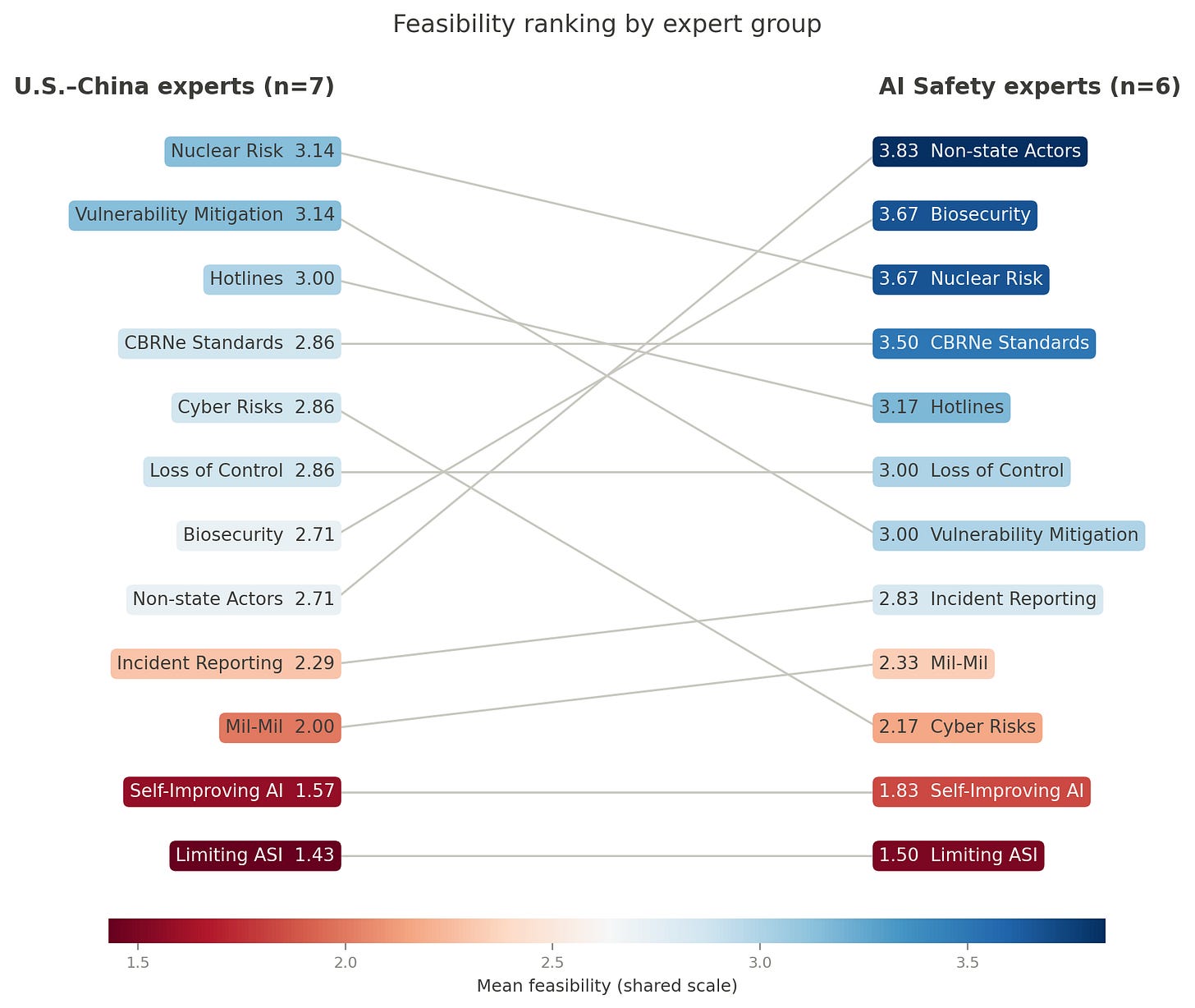
To maximize the potential for success, the dialogue should prioritize manageable topics that align with both nations' interests. Initiating a working group on specific areas, such as moderating risks associated with AI-enabled threats, could pave the way for more substantial cooperation. While experts from both the U.S. and China agree on the value of collaboration, their perceptions of feasibility differ significantly. The U.S.-China experts are cautious, identifying only a few topics as likely to yield productive outcomes, whereas the Track II experts express greater optimism. This divergence highlights the need for a strategic approach that balances ambition with realism, focusing on areas where technical discussions can lead to actionable agreements.
Involving a diverse array of stakeholders in the AI safety dialogue is essential for bridging the information gap between governments and the technical community. Both nations must leverage the expertise of companies, scientists, and think tanks to inform their positions on AI governance. By soliciting public comments and engaging with experts outside of traditional policy circles, negotiators can identify critical risks and best practices that warrant coordinated efforts. This approach not only enriches the dialogue but also fosters a sense of shared responsibility in addressing the challenges posed by advanced AI technologies.
Despite the skepticism surrounding U.S.-China cooperation on AI safety, the potential for meaningful engagement remains. The recent uptick in AI security incidents underscores the urgency for both countries to affirm their commitment to bilateral talks aimed at mitigating catastrophic risks. While ambitious agreements may be unrealistic in the near term, establishing a foundation for information sharing and direct communication on observed risks can lead to more effective risk management strategies. As the AI frontier continues to evolve, it is imperative that both governments act decisively to capitalize on this opening for collaboration, lest they fall behind in addressing the pressing challenges posed by AI advancements.