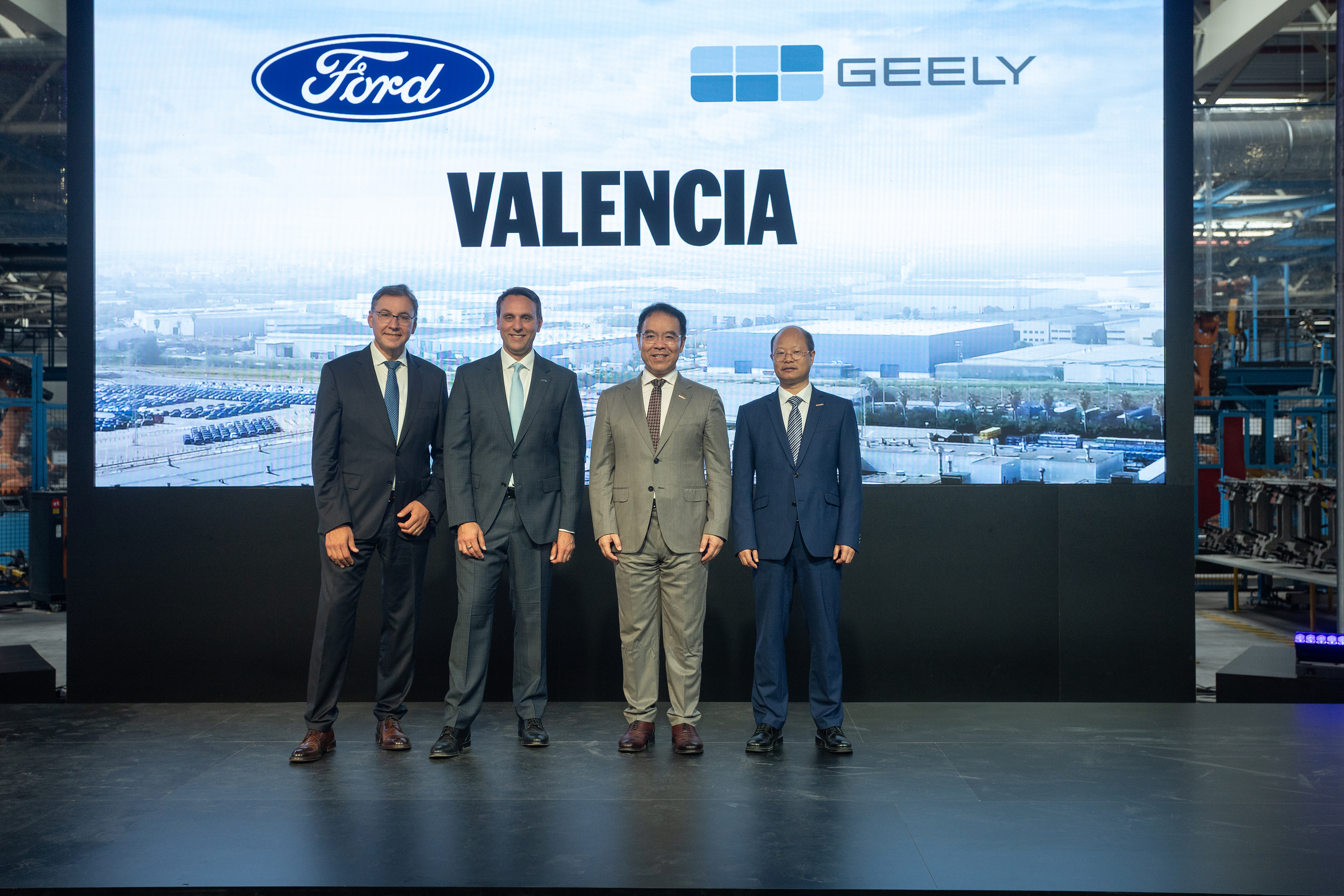
- Ford and Geely's joint venture aims to establish a competitive foothold in the European EV market, responding to increasing cost pressures and competition.
- The partnership will leverage Ford's existing manufacturing capabilities in Valencia, Spain, to produce Geely's electric vehicles starting in 2028.
- This strategic collaboration signals a significant shift in the automotive landscape, emphasizing the importance of alliances in navigating the transition to electric mobility.
The formation of a joint venture between Ford and Geely marks a pivotal moment in the automotive industry, particularly as the European market faces escalating pressures from both cost and competition. With the EV sector rapidly evolving, this partnership is not merely a response to current market dynamics; it is a proactive strategy aimed at securing a sustainable future in a landscape increasingly dominated by electric mobility. The decision to produce Geely's electric vehicles at Ford's Valencia facility underscores the urgency of innovation and collaboration in a market that is becoming increasingly crowded and competitive.
This collaboration will see Geely's electric vehicles rolling off the production line in Valencia, Spain, starting in 2028. By utilizing Ford's established manufacturing infrastructure, the joint venture is poised to capitalize on existing resources while minimizing the financial burden associated with new facility development. This approach not only enhances operational efficiency but also positions both companies to respond more agilely to the evolving demands of the European EV market.
The strategic implications of this partnership extend beyond mere production capabilities. By joining forces, Ford and Geely are signaling a commitment to innovation and competitiveness in a sector that is rapidly transforming. The collaboration reflects a broader trend within the automotive industry, where traditional manufacturers are increasingly recognizing the necessity of alliances to navigate the complexities of electrification and sustainability. This move could serve as a blueprint for other manufacturers seeking to enhance their competitive edge in the face of similar challenges.
Ultimately, the Ford-Geely partnership represents a significant step towards revitalizing the automotive landscape in Europe. As both companies work together to harness their respective strengths, they are not only addressing immediate market pressures but also laying the groundwork for a more sustainable and competitive future in electric vehicle production. This joint venture could very well redefine the dynamics of the European EV market, setting a precedent for future collaborations aimed at overcoming the challenges of the transition to electric mobility.