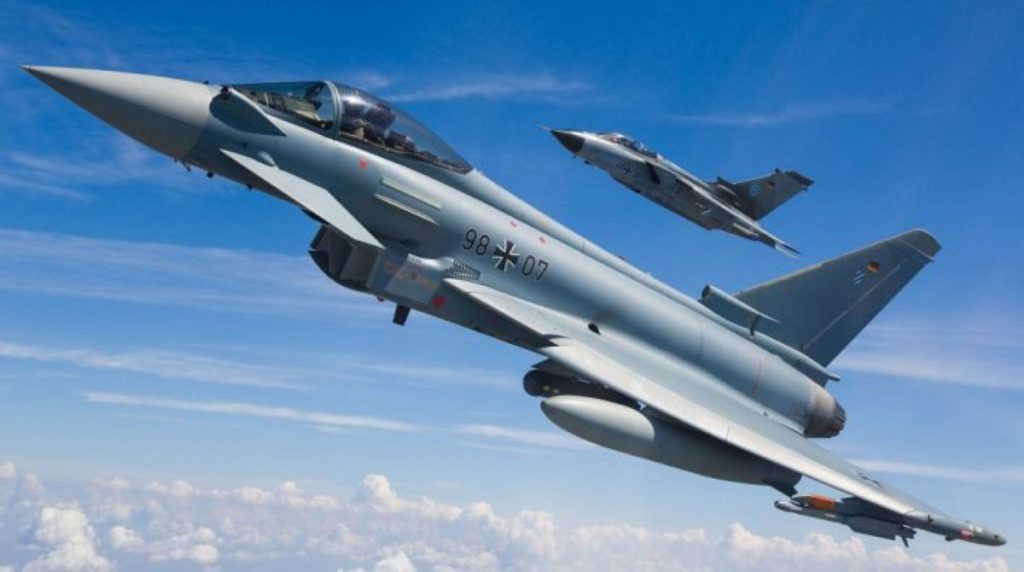
- The rollout of Germany's Tranche 4 Eurofighter marks a significant step in enhancing European air combat capabilities amid ongoing delays in next-generation systems.
- The integration of the HENSOLDT ECRS Mk 1 radar elevates the Typhoon's role from interceptor to a sophisticated electronic warfare platform, enhancing its competitive edge.
- With deliveries set between 2025 and 2030, these upgraded fighters will serve as crucial capability bridges while Europe navigates the complexities of future combat air system developments.
The introduction of Germany's Tranche 4 Eurofighter is a pivotal moment for European defense, particularly as air forces grapple with the vulnerabilities of operating in contested airspace. The unveiling of the first aircraft at the Bavaria Defense Summit underscores a strategic commitment to bolster military capabilities while waiting for next-generation systems that are still years away. This move signals a robust investment in upgraded fourth-generation fighters, which will complement advanced weaponry like hypersonic missiles, thereby enhancing deterrence and operational effectiveness in potential conflict scenarios.
The centerpiece of this upgrade is the HENSOLDT ECRS Mk 1 radar, which represents a significant leap in technology. Unlike traditional mechanically scanned radars, the active electronically scanned array (AESA) system allows for simultaneous multi-target tracking and electronic warfare capabilities. This advancement is akin to the transition from basic mobile phones to smartphones, showcasing a leap in operational versatility. Flight tests utilizing an A320 modified with a Typhoon nose have validated the radar's performance, moving beyond theoretical discussions to practical application. Specialist analyses suggest that the Captor-E Mk 1 can detect targets over 370 kilometers and track up to 40 airborne contacts, although these figures are not officially confirmed.
The production timeline for the Tranche 4 Eurofighters, with deliveries scheduled from 2025 to 2030, positions these aircraft as essential capability bridges during a period marked by delays in the development of next-generation systems. Germany's order for 38 aircraft, along with Spain's addition of 20 under the Halcón program, reflects a collaborative approach to enhancing European air power. This strategy is particularly relevant as the Franco-German-Spanish Future Combat Air System faces extended timelines, necessitating immediate enhancements to existing fleets. Concurrently, the UK's investment in a more advanced ECRS Mk 2 radar variant indicates a broader trend of escalating technological sophistication across the Eurofighter family.
The radar upgrade fundamentally transforms the Typhoon's operational role, evolving it from a mere interceptor to a comprehensive networked sensor platform capable of jamming enemy systems and sharing targeting data across formations. This capability mirrors the multitasking functionality of modern smartphones, allowing the Typhoon to detect, track, and disrupt threats simultaneously. Such advancements position the upgraded Typhoon favorably against competitors like the Rafale and F-16V, where electronic warfare capabilities increasingly dictate success in export markets. As flight testing of the first Tranche 4 aircraft is set to commence soon, operational capability is anticipated by the latter half of this decade, marking a critical juncture for Europe's defense landscape.
For the European defense industrial base, these upgrades are not merely about preserving existing capabilities; they serve as proving grounds for technologies that will eventually transition to sixth-generation systems. The pressing question remains whether Europe can maintain this technological momentum long enough to yield significant strategic advantages in the evolving landscape of aerial warfare. The successful integration and operational deployment of these advanced systems will be crucial in determining the future of European air power and its ability to respond to emerging threats.