- India's recent agreement to purchase Javelin missiles from the U.S. highlights a significant shift in defense relations, emphasizing the importance of military cooperation amid ongoing trade negotiations.
- The deal, valued at approximately $45 million, includes around 100 missiles and 25 launchers, but the strategic implications of co-production agreements may outweigh the immediate financial aspects.
- Bharat Dynamics' exploratory co-production deal with Raytheon and Lockheed Martin signals a potential future for India as a manufacturing hub for advanced military technology in Asia.
The recent agreement between India and the United States for the purchase of Javelin missiles underscores a pivotal moment in the geopolitical landscape, particularly as both nations navigate complex trade negotiations. The timing of this deal is not coincidental; it coincides with ongoing discussions aimed at finalizing a broader trade agreement, where defense sales are a critical component. This move not only enhances India's military capabilities but also solidifies its strategic partnership with the U.S., reflecting a mutual interest in countering regional threats.
The deal encompasses approximately 100 missile rounds and 25 launch units, with estimates placing the total value around $45 million. While the financial figures are noteworthy, the real significance lies in the breakthrough it represents for India-U.S. defense relations. This agreement marks a step towards deeper cooperation in defense technology and trade, which could pave the way for future collaborations. The Javelin system, known for its advanced targeting capabilities and ease of use, will provide Indian forces with a modern anti-tank solution, enhancing their operational effectiveness on the battlefield.
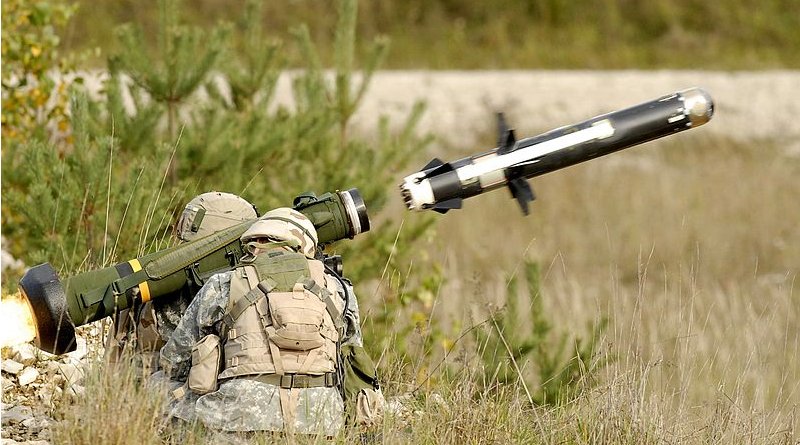
Understanding the Javelin system is crucial; it is not merely a missile but a comprehensive weapon system that includes a Command Launch Unit (CLU) and the FGM-148 missile. The CLU's thermal imaging capabilities allow for effective targeting in various conditions, making it a versatile tool for ground forces. The missile's fire-and-forget technology enables operators to engage targets without needing to guide the missile post-launch, significantly increasing their safety and tactical options. This capability is particularly relevant for India, which has faced challenges in its military engagements with armored threats.
India's interest in the Javelin dates back to 2010, but the deal has only materialized now due to the evolving trade dynamics between the two nations. The U.S. has been keen to increase defense sales to India as part of a broader strategy to strengthen ties and counterbalance regional adversaries. The potential for co-production with Bharat Dynamics Limited is particularly noteworthy; while the current agreement is exploratory, it lays the groundwork for India to potentially manufacture the Javelin system domestically. This could not only enhance India's defense capabilities but also position it as a key player in the Asian defense manufacturing landscape.
In conclusion, the Javelin deal is emblematic of a larger trend in international defense relations, where military cooperation is increasingly intertwined with trade negotiations. As India moves forward with this acquisition, the implications for both nations could be profound, potentially leading to a more robust defense partnership and greater technological collaboration. The focus on co-production may ultimately allow India to establish itself as a manufacturing hub for advanced military systems, reshaping the regional defense landscape in the process.