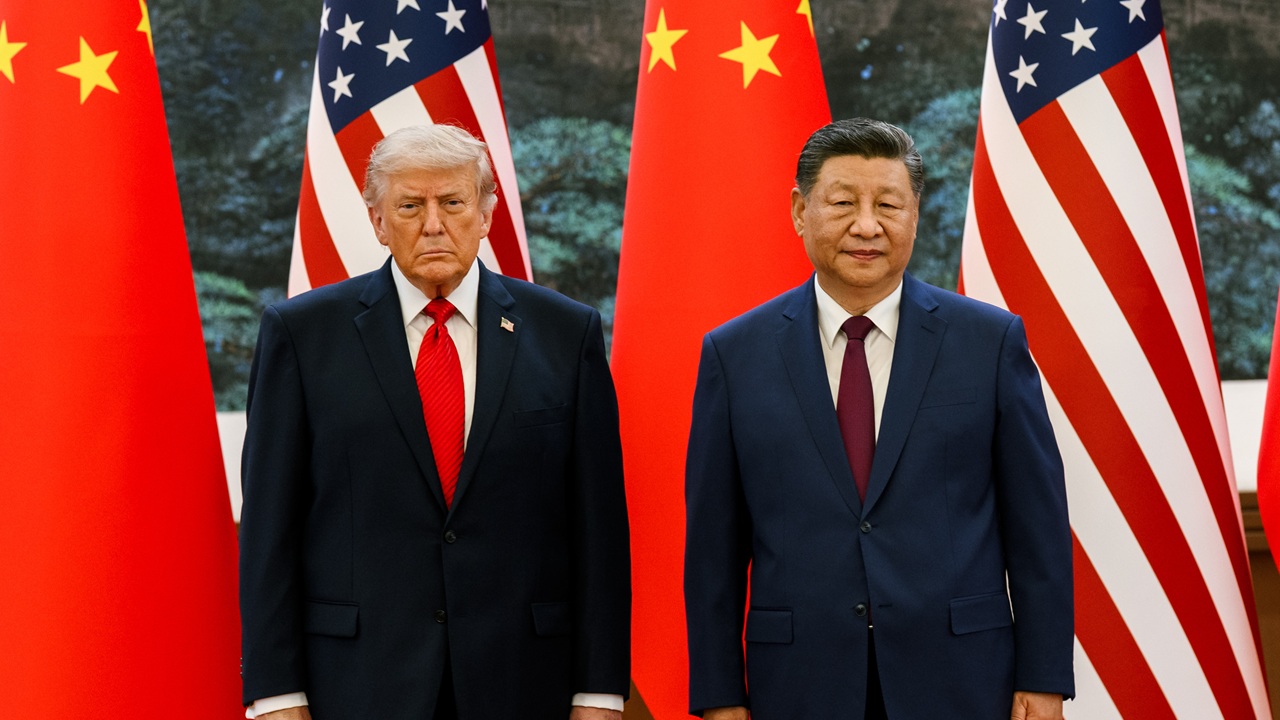
- The Trump-Xi summit, while visually impressive, failed to yield significant diplomatic breakthroughs, challenging narratives of U.S. decline and Chinese ascendancy.
- Contrary to claims that the Iran conflict weakened the U.S., evidence suggests it has adversely affected China more, highlighting the complexities of global energy dependencies.
- The absence of major agreements at the summit should not be viewed as a failure; instead, it reflects a strategic posture that prioritizes U.S. interests over superficial concessions.
The recent summit between President Trump and Chinese leader Xi Jinping has sparked considerable debate, particularly regarding its implications for U.S.-China relations and global power dynamics. The lack of substantial outcomes from the meeting has led to the proliferation of myths that misrepresent the current geopolitical landscape. Understanding these myths is crucial, as they shape perceptions of both nations' strengths and weaknesses at a time when strategic clarity is paramount.
One prevalent myth suggests that the ongoing conflict in Iran has significantly weakened the United States, compelling Trump to seek assistance from China. While it is true that the U.S. has faced challenges, including rising energy prices, the narrative overlooks the detrimental effects the conflict has had on China. As the world's largest oil importer, China is heavily reliant on Middle Eastern crude, and the war has restricted its access to discounted oil, thereby straining its manufacturing sector and consumer spending. This context reveals that the Iran conflict may have harmed China more than the U.S., complicating the simplistic view of a weakened America seeking help from a rising China.
Another myth propagated during the summit is the notion that China is an unstoppable rising power while the U.S. is in decline. Xi's invocation of the "Thucydides Trap" to frame the U.S.-China rivalry ignores the significant internal challenges facing China, including economic stagnation, demographic issues, and a stifling political environment. Despite China's advancements in certain technologies, these gains do not compensate for the broader economic malaise. In contrast, the U.S. retains substantial advantages in innovation, energy independence, and market dynamics, as evidenced by the presence of influential CEOs accompanying Trump to Beijing, signaling robust American economic strength.
Lastly, the summit's perceived lack of breakthroughs has led some critics to label it a failure. However, this perspective fails to recognize that the absence of major concessions on critical issues like trade and Taiwan may actually reflect a strategic success for the U.S. By maintaining a firm stance, Trump demonstrated that American interests would not be compromised for the sake of optics. Xi's attempts to leverage flattery and threats regarding Taiwan may have backfired, as Trump indicated a willingness to engage directly with Taiwan's leadership, a move that could escalate tensions with Beijing.
In summary, the Trump-Xi summit serves as a reminder of the complexities inherent in great-power diplomacy. The narratives surrounding American decline and Chinese inevitability are oversimplified and overlook the substantive actions taken by the U.S. administration. As the geopolitical landscape continues to evolve, a nuanced understanding of these dynamics will be essential for formulating effective strategies that prioritize long-term U.S. interests while navigating the challenges posed by a formidable China.