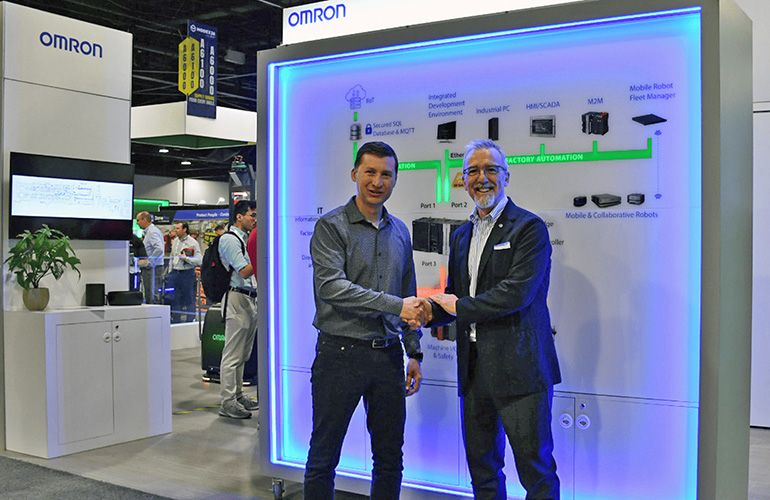
- Comau and OMRON Robotics have formed a strategic partnership aimed at enhancing industrial automation across multiple high-growth sectors.
- This collaboration is designed to meet the increasing demand for flexible and scalable automation solutions in manufacturing environments.
- The integration of their complementary technologies is expected to unlock new operational efficiencies and adaptability for manufacturers worldwide.
The urgency of this partnership between Comau and OMRON Robotics cannot be overstated, as the manufacturing landscape is rapidly evolving to meet the demands of modern production. With industries such as electronics, semiconductors, and medical manufacturing experiencing significant growth, the need for adaptable and easily deployable automation solutions has never been more critical. This collaboration is not merely a response to current market conditions; it represents a proactive strategy to position both companies at the forefront of industrial automation innovation.
The agreement between Comau and OMRON Robotics aims to leverage their respective strengths in robotics and automation technologies. Olivier Welker, CEO of OMRON Robotics, emphasized the importance of this collaboration in delivering flexible, connected, and sustainable production systems. By combining their portfolios, the two companies intend to create solutions that not only meet current manufacturing needs but also anticipate future demands, thereby fostering long-term growth for their customers.
As the partners align their technological capabilities, they are poised to address the rising customer expectations for scalable automation that integrates seamlessly into existing production lines. Pietro Gorlier, CEO of Comau, highlighted the strategic alignment of their goals, noting that this partnership enhances Comau's presence in high-growth sectors and new geographies. The collaboration is expected to facilitate the development of solutions that are easier to deploy and highly adaptable, which is essential for manufacturers navigating increasing industrial complexity.
Looking ahead, the integration of robotics hardware, advanced control technologies, and software-driven automation will be central to their joint initiatives. Both companies are committed to unlocking new levels of operational efficiency and performance, which will be crucial for manufacturers aiming to remain competitive in a fast-paced market. This partnership not only signifies a significant step forward in their respective strategies but also sets a precedent for future collaborations in the robotics and automation space, potentially reshaping the industry landscape.