
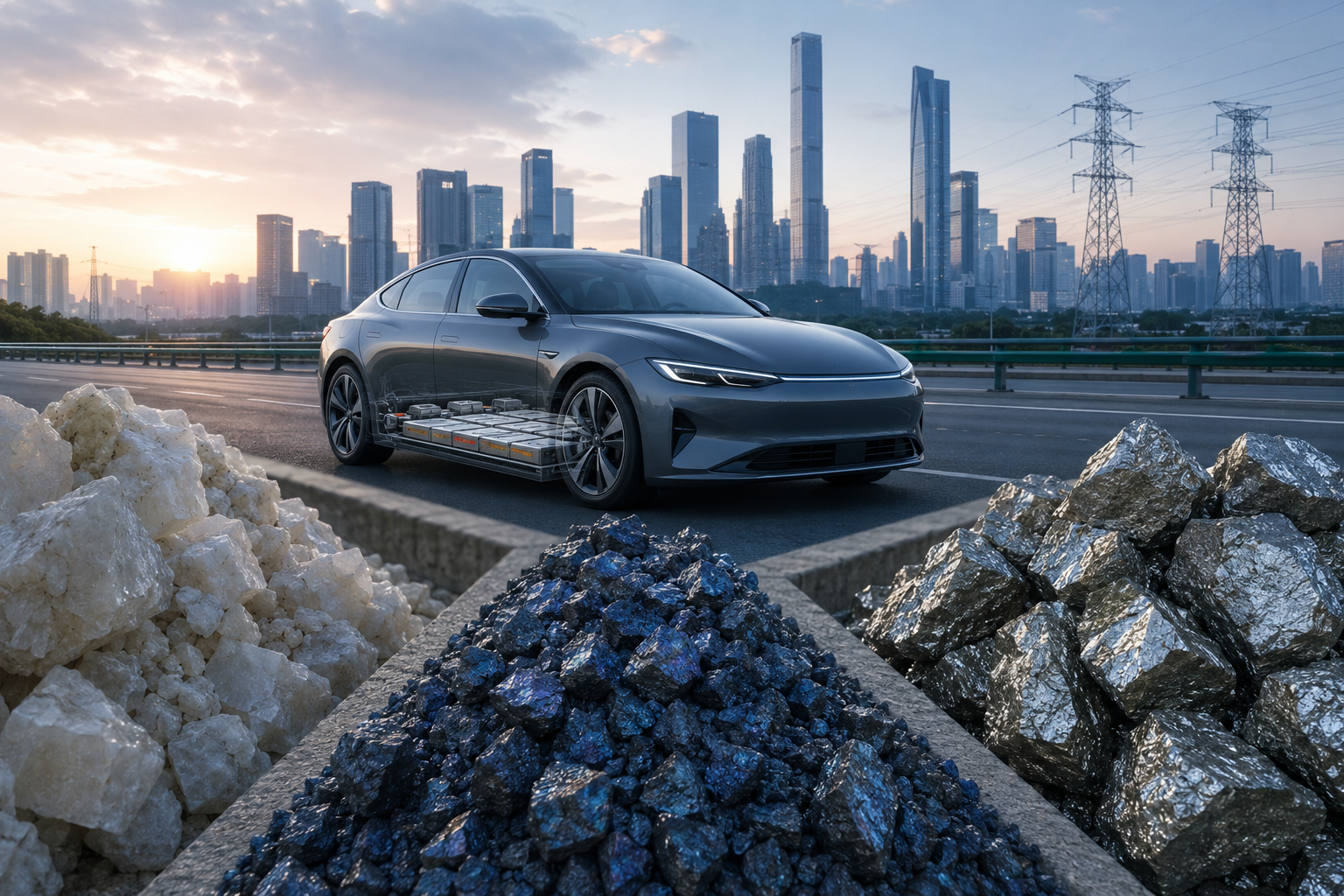
- China's electric vehicle (EV) transition is at risk of significant overestimation due to potential lithium and cobalt supply constraints.
- Modeling indicates that neglecting these constraints could lead to a 42% overestimation of EV ownership by 2060 and a 57% underestimation of cumulative CO2 emissions.
- While recycling and the adoption of lower-cobalt batteries may alleviate some supply pressures, achieving net-zero transport will still necessitate carbon-neutral electricity or carbon removal strategies.
The urgency of addressing supply chain constraints in China's electric vehicle sector cannot be overstated, as the nation aims to lead the global transition to sustainable transportation. Recent modeling highlights that if lithium, cobalt, and nickel limitations are ignored, projections for EV ownership could be drastically inflated, leading to misguided policy and investment decisions. The implications of these findings are profound, suggesting that the anticipated benefits of a robust EV market may not materialize if critical resource constraints are not adequately addressed.
The analysis reveals that overlooking the availability of essential materials could result in a staggering 42% overestimation of the number of EVs on the road by 2060. This miscalculation extends beyond mere vehicle counts; it also encompasses a 57% underestimation of cumulative CO2 emissions, which could undermine climate goals. The financial implications are equally concerning, with transition costs potentially underestimated by 6%. Such discrepancies could lead to inadequate planning and investment in infrastructure, ultimately jeopardizing the success of China's EV ambitions.
To mitigate these risks, strategies such as recycling and the development of lower-cobalt battery technologies are being explored. These approaches could help ease the supply pressures associated with critical materials. However, even with these advancements, the transition to net-zero transport remains contingent upon the availability of carbon-neutral or negative-emissions electricity sources. This highlights the interconnectedness of the EV supply chain and the broader energy landscape, emphasizing the need for a holistic approach to achieving sustainability goals.
In conclusion, the findings underscore the necessity for policymakers and industry stakeholders to take a proactive stance in addressing the potential bottlenecks in lithium and cobalt supplies. As China forges ahead with its EV transition, a comprehensive understanding of material constraints and their implications will be essential for realizing a sustainable and economically viable future in transportation. Without this awareness, the ambitious targets set forth may remain out of reach, leaving both environmental and economic objectives unfulfilled.







