
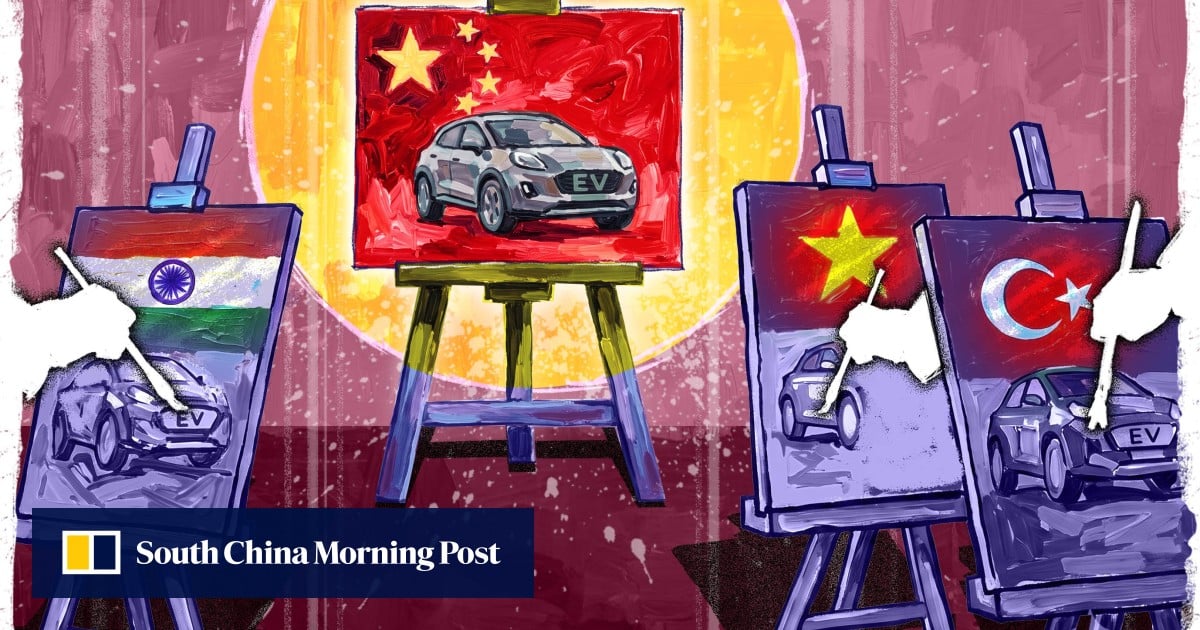
- China's rapid ascent in the electric vehicle (EV) sector illustrates the effectiveness of strategic government policies and investments in fostering innovation.
- The success of Chinese EV manufacturers highlights the potential for other countries to leverage similar frameworks to enhance their own automotive industries.
- As global demand for EVs surges, the lessons from China's experience could reshape competitive dynamics in the automotive market worldwide.
The urgency of the global green shift underscores the critical moment for emerging economies to capitalize on the momentum generated by China's electric vehicle (EV) sector. As nations strive to meet climate goals, the automotive industry stands at the forefront of this transformation, and China's experience serves as a compelling case study for others aiming to enhance their own manufacturing capabilities. The rapid growth of Chinese EV makers from relative obscurity to dominant players in the global market exemplifies how targeted policies and investments can yield substantial results in a short timeframe, suggesting that similar strategies could be employed elsewhere to stimulate local industries.
China's rise in the EV sector can be attributed to a combination of government support, aggressive investment in research and development, and a robust supply chain that has been meticulously cultivated over the years. The Chinese government implemented a series of policies designed to promote EV adoption, including subsidies for consumers, incentives for manufacturers, and stringent emissions regulations that pushed traditional automakers to pivot towards electric solutions. This multifaceted approach not only spurred domestic innovation but also positioned China as a key player in the global EV supply chain, providing critical components and technologies that other countries now rely on.
The implications of China's success extend beyond its borders, as other nations look to replicate this model to foster their own automotive sectors. Countries with emerging markets can draw valuable lessons from China's policy playbook, particularly in how to create an environment conducive to innovation and investment. By adopting similar strategies—such as providing financial incentives, investing in infrastructure, and encouraging public-private partnerships—these nations can accelerate their transition to electric mobility and enhance their competitiveness in the global market.
As global demand for electric vehicles continues to rise, the competitive landscape is shifting dramatically. Traditional automotive powerhouses are now facing pressure not only from established players but also from agile newcomers inspired by China's trajectory. This evolving dynamic suggests that the automotive industry is on the brink of a significant transformation, where the ability to adapt and innovate will determine success. For emerging economies, the challenge will be to harness the lessons learned from China while tailoring their approaches to fit their unique contexts and capabilities, ensuring they do not miss out on the opportunities presented by the green transition.







