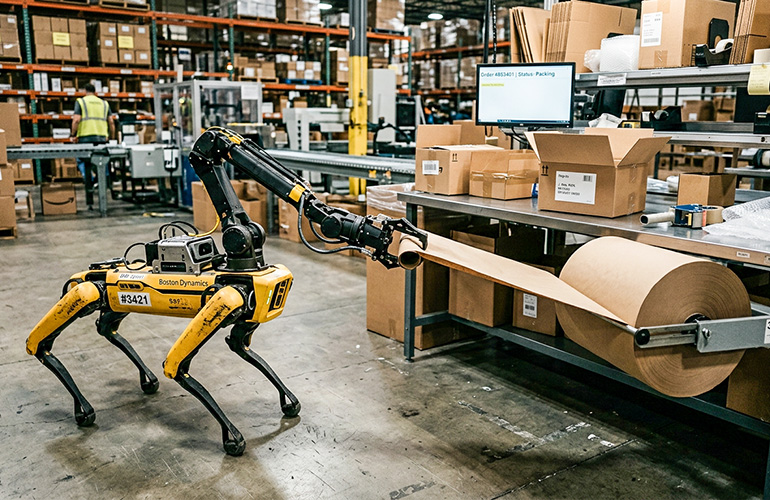
- Physical AI is emerging as a critical solution for warehouses seeking to balance sustainability with operational efficiency.
- Ranpak's approach demonstrates that sustainable practices can lead to significant cost savings and increased throughput, challenging the notion that profitability and environmental responsibility are mutually exclusive.
- The focus on human-centered automation highlights the potential for technology to enhance workforce capabilities rather than replace them, fostering a more strategic role for employees in logistics operations.
The urgency of addressing the "green dilemma" in logistics has never been more pronounced, as warehouse managers grapple with the dual pressures of meeting sustainability targets while maintaining throughput and budgetary constraints. The upcoming session at the Robotics Summit & Expo in Boston, led by Omar Asali, chairman and CEO of Ranpak, promises to provide critical insights into how physical AI can bridge this gap effectively. As the industry shifts towards more sustainable practices, understanding the role of physical AI in optimizing warehouse operations is essential for staying competitive.
Asali's presentation will delve into the transformative potential of physical AI, which extends beyond traditional automation. This technology encompasses intelligent, sensor-driven systems capable of understanding and responding to the physical characteristics of the items they handle. By integrating smart software with tangible warehouse processes, physical AI creates a feedback loop that enables real-time resource optimization, thereby enhancing operational efficiency while adhering to sustainability goals.
Ranpak's data-driven approach is particularly compelling, as it provides concrete evidence that sustainability can coincide with profitability. The reported outcomes, such as a 25% reduction in corrugate usage, a 75% decrease in box SKUs, and a 4–5x increase in throughput, illustrate that green initiatives can yield substantial financial benefits. These results not only challenge the long-held belief that environmental responsibility comes at a cost but also demonstrate that aligning operational KPIs with sustainability objectives can lead to transformative shifts in warehouse management.
Moreover, the emphasis on human-centered automation in Asali's session underscores a critical shift in the narrative surrounding automation technologies. Rather than viewing automation as a threat to jobs, the focus is on upskilling the workforce by alleviating repetitive and ergonomically taxing tasks. This approach allows employees to transition into higher-value strategic roles, fostering a collaborative environment where technology enhances human capabilities rather than replaces them. This vision of the future positions technology as a partner in the workforce, ultimately leading to a more efficient and engaged labor force.
As the logistics industry continues to evolve, the insights shared at the Robotics Summit will be invaluable for organizations looking to implement automation frameworks that prioritize sustainability. The session titled "How Physical AI Is Driving Profitable, Scalable Sustainability in Warehouses" is a must-attend for those seeking to quantify ROI in an era where sustainability is paramount. By registering for this session, attendees will gain practical knowledge that can be applied to their operations, ensuring they remain at the forefront of the sustainability movement within the logistics sector.