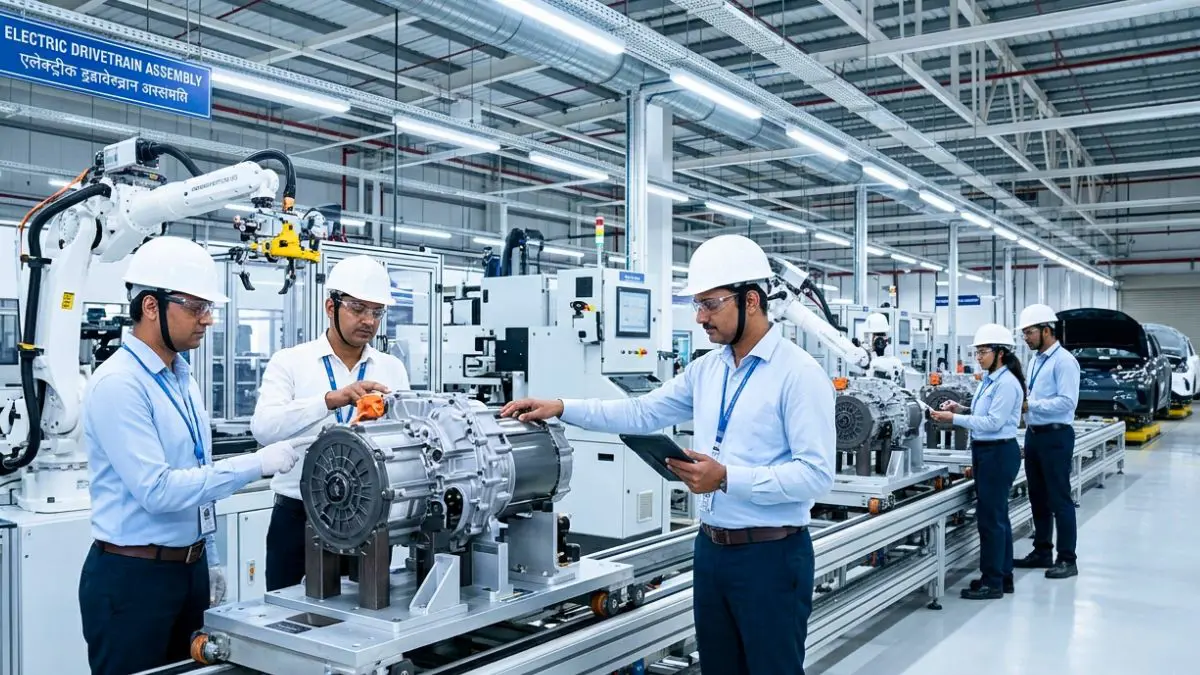
- Bosch and Tata AutoComp are deepening their collaboration in electric vehicle components to align with India's push for localisation in the EV supply chain.
- This strategic partnership is indicative of a broader trend where global companies are adapting to local manufacturing demands in emerging markets.
- The move is expected to enhance the competitiveness of India's EV sector while reducing dependency on imports for critical components.
The urgency of localisation in India's electric vehicle (EV) sector cannot be overstated, as the country seeks to establish a robust domestic supply chain that can support its ambitious EV adoption goals. Bosch and Tata AutoComp's decision to explore deeper collaboration in EV components is a direct response to this imperative, reflecting a strategic alignment with government policies aimed at boosting local manufacturing. This partnership not only signifies a commitment to enhancing the local ecosystem but also positions both companies to capitalize on the growing demand for EVs in India.
The collaboration between Bosch and Tata AutoComp is set against the backdrop of India's increasing focus on reducing reliance on foreign imports for EV components. As the government intensifies efforts to localize production, companies are recognizing the need to adapt their strategies accordingly. By working together, Bosch and Tata AutoComp can leverage their respective strengths—Bosch's technological expertise and Tata AutoComp's local market knowledge—to create a more resilient supply chain that meets both quality and cost-effectiveness standards.
This partnership is not merely a response to regulatory pressures; it also represents a strategic maneuver to enhance competitiveness in a rapidly evolving market. As global players increasingly look to India as a key market for EVs, the ability to produce components locally will be a significant advantage. The collaboration could lead to innovations in manufacturing processes and product development, ultimately benefiting the entire EV ecosystem in India.
Moreover, the implications of this collaboration extend beyond just the two companies involved. By strengthening local manufacturing capabilities, Bosch and Tata AutoComp are contributing to the broader goal of making India a global hub for EV production. This move could inspire other companies to follow suit, fostering a more integrated and self-sufficient EV supply chain that aligns with national objectives. As the landscape of the EV market continues to evolve, partnerships like this will be crucial in shaping the future of transportation in India.