As crude prices climb and tankers slow in the Strait of Hormuz, the Pentagon is quietly turning to synthetic “clean” jet fuel that can be produced inside a war zone, mainly to reduce casualties and operational risk. A conflict that was expected to reinforce the strategic value of oil is instead pushing the largest fuel customer in the world to test carbon‑based alternatives and distributed energy systems.
When Convoy Security Becomes An Energy Story
For decades, U.S. planners have treated fuel convoys as one of the most vulnerable elements in any campaign. Every additional gallon of diesel or jet fuel that has to move by road means more trucks, more exposure and more chances for an ambush. In Iraq and Afghanistan, fuel and water convoys were attacked often enough that cutting demand became a matter of force protection rather than environmental policy.
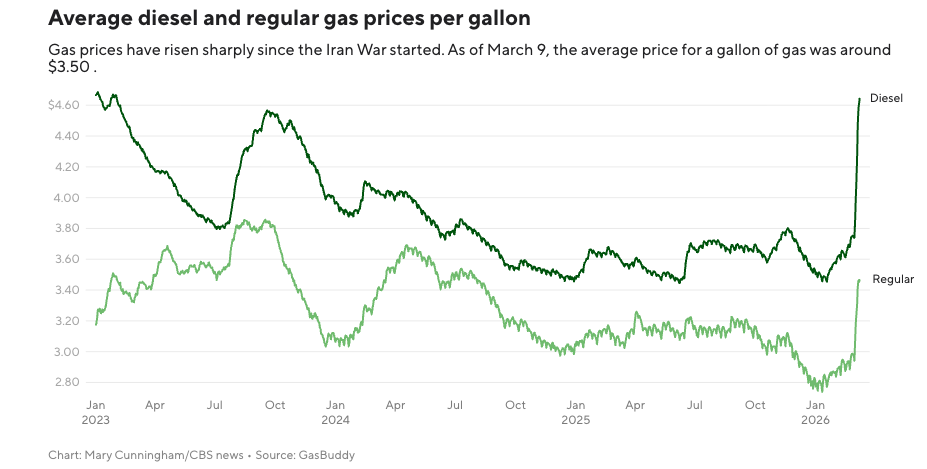
The current war with Iran has amplified those concerns. Tanker traffic through the Strait of Hormuz has slowed as the U.S. and Israel strike Iranian targets, including some energy infrastructure, and major insurers reassess coverage for ships in the region. Oil markets have reacted quickly, with crude moving well above 110 dollars per barrel and gasoline prices rising across North America and Europe. In this environment, each disrupted shipment or damaged convoy becomes more expensive both financially and strategically.
In response, the Pentagon has begun funding containerized systems developed by a Brooklyn‑based startup that can convert captured carbon dioxide into synthetic aviation fuel. These units fit inside standard shipping containers and can be deployed to forward bases, where they use local electricity and CO₂ to produce fuel on site. Instead of relying solely on long, exposed fuel lines carrying petroleum‑based jet fuel, commanders gain a way to manufacture at least part of their supply closer to the point of use.
On the surface, these projects look like classic climate technology: sustainable aviation fuel, carbon utilization and synthetic hydrocarbons. In practice, they are driven by operational needs. Fewer convoys mean fewer attack opportunities and a shorter, more controllable logistics chain. Clean technology in this context is not adopted for branding or ESG optics, but because the traditional fossil fuel logistics model has become too risky and too costly under current conditions.
This is the central irony emerging from the Iran conflict. A war tied to oil and regional power is accelerating the search for fuels and power sources that can be produced near the front line, even when they come with higher upfront costs.
Oil Shocks, Gas Spikes And A Home Energy Pivot
The Pentagon’s interest in synthetic fuel is one example within a broader shift that now spans multiple regions and sectors.
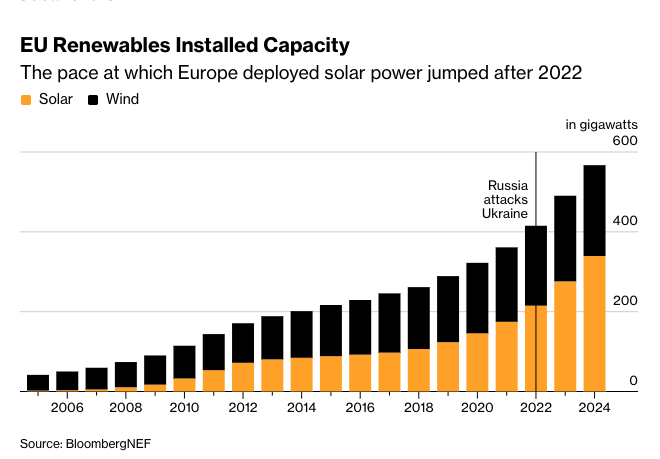
In Europe, the Iran conflict is intersecting with unresolved vulnerabilities from the 2022 Russian gas crisis. European governments previously rushed to replace pipeline gas with liquefied natural gas, rapidly deploying floating import terminals and intervening to shield consumers from extreme price swings. Today, the continent remains heavily reliant on imported LNG, much of it shipped through routes that are again under pressure.
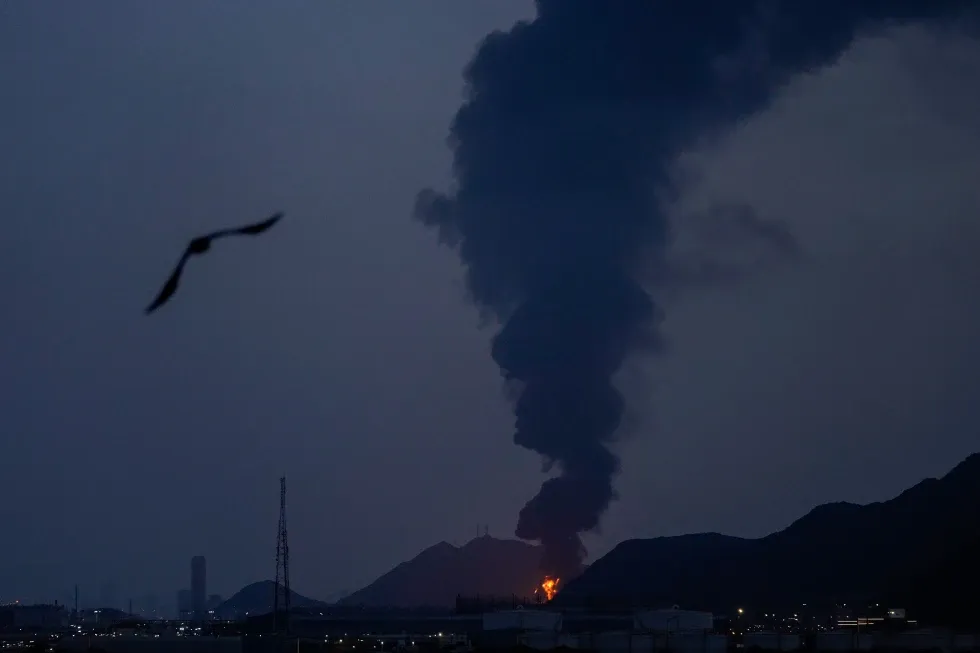
Drone and missile attacks linked to the conflict have already disrupted operations at a major LNG facility in the Gulf, temporarily removing a notable slice of global gas supply. European gas benchmarks have jumped sharply, with some contracts moving by double digits in a matter of days. Policymakers in Brussels are warning that continued dependence on imported gas exposes the region to recurring price and supply shocks, and that fixing this solely with more fossil infrastructure would repeat the same vulnerability in a different form.
Short‑term political reactions include calls to ease energy taxes and adjust some climate‑related charges, but the strategic conclusion is drifting in a different direction. The most reliable way to reduce exposure to these shocks is to accelerate domestic deployment of renewables and electrification.
Unlike earlier crises, this one is unfolding in a market where alternatives are already mature. Solar, wind, grid‑scale batteries and high‑efficiency electric heat pumps are established technologies with falling costs and real track records. In many locations, the lifetime cost of electricity from new solar or onshore wind is now lower than the cost of generating power from imported gas. That means each new spike in oil or gas prices not only harms consumers and industry; it also improves the relative economics of clean energy deployment.
For governments explaining their choices to voters and businesses, this matters. Renewables and electrification can be framed not only as climate measures, but as core infrastructure for energy security and price stability when tanker routes and gas flows are at risk.
Global Signals: Three Current Examples
Seen against this backdrop, the Pentagon’s synthetic fuel experiment is not an isolated story about one company. It is part of a wider reassessment of fossil risk that is now visible across global coverage and policy debates.
Example 1: “Iran war shakes energy system” and strengthens the renewables case
Recent international reporting describes how the Iran war is shaking global energy markets while simultaneously strengthening the political and economic argument for renewable energy. Officials and analysts point out that refinery strikes, disrupted oil and LNG shipping and higher prices are making the case for more solar, wind and energy efficiency in very practical terms. Rather than discussing climate targets in the abstract, leaders are talking about how locally produced renewables and electrification can shield households and industry from external shocks and inflationary waves tied to fossil imports.
In several countries, this has reopened debates on accelerating permitting for wind and solar, expanding grid investment and increasing support for technologies like heat pumps. The tone is less about virtue and more about resilience: how to keep economies running when oil and gas supplies are subject to missiles, sanctions and maritime bottlenecks.
Example 2: Europe’s “energy weakness” and accelerated clean build‑out
Coverage focused on Europe emphasizes that the Iran‑driven price shock is exposing structural weaknesses that were not fully resolved after the Russia‑Ukraine crisis. Commentators describe how a new spike in gas prices has revived fears about industrial competitiveness and household affordability. At the same time, it has stiffened arguments inside the European Union for accelerating renewable deployment and grid modernization.
Energy‑policy voices in and around Brussels are framing additional wind, solar and storage capacity as a way to cut the region’s “energy import bill” and reduce exposure to future conflicts in supplier regions. The idea is not to eliminate fossil fuels overnight, but to reduce the marginal dependence on spot gas and oil that makes every geopolitical flare‑up a domestic crisis. In this narrative, renewables, storage and demand‑side flexibility are positioned as tools to strengthen Europe’s strategic autonomy.
Example 3: Analysts see high fossil prices boosting clean tech economics
Energy analysts and think‑tank work are telling a similar story in different language. Commentaries and briefings on the Iran war highlight how higher oil and gas prices alter the economic balance between fossil and clean options. Where clean technologies were already close to cost parity, the latest price spikes have tipped the scales further.
Analysts note that utility‑scale solar and wind, once seen as dependent on subsidies, now look increasingly attractive as hedges against fuel price risk. Likewise, electrification technologies such as heat pumps and electric vehicles gain an advantage when fossil input costs are volatile. Some go further and argue that the Iran war could accelerate policy measures and capital allocation that were already pointed toward decarbonization, by turning energy security into an additional driver alongside climate.
Taken together, these examples show that the Pentagon’s move toward synthetic fuel is just one visible expression of a broader pattern. Across defense, policy and markets, actors are treating clean technology as a practical response to fossil volatility and physical risk rather than only as a climate solution.
Security‑Driven Decarbonization Moves Into Budgets
The pattern is visible both in defense procurement and civilian energy planning.
On the defense side, interest in synthetic fuels, microgrids and efficiency is now reflected in concrete projects and funding lines. Containerized fuel systems for contested environments, expansion of base‑level microgrids and upgrades that allow critical facilities to operate through grid disruptions are bringing a wide range of clean technologies into one of the most demanding operating environments. Successful deployment in these conditions gives such systems a level of operational validation that is difficult to achieve in commercial pilots alone.
On the civilian side, governments, utilities and large energy users are re‑evaluating what “cheap” and “secure” energy really mean. If the lowest headline cost option leaves a system exposed to severe price swings or physical disruption at a distant chokepoint, it may no longer be the rational choice. That pushes demand toward:
- Large‑scale solar and wind projects backed by long‑term contracts
- Grid storage that can smooth intraday volatility and support higher renewable penetration
- Distributed energy resources such as rooftop solar, behind‑the‑meter batteries and flexible demand, which increase local resilience
The Iran war is, first and foremost, a humanitarian and geopolitical crisis. It is not a positive development for any sector. At the same time, it is exposing in real time how vulnerable a fossil‑centric model can be when physical chokepoints and political relationships fail. Under those stresses, the value of flexible, low‑carbon alternatives becomes more visible.
Implications For Technology‑Focused Customers
From a strategic perspective, the Iran conflict is another step in the erosion of confidence in “just in time” global oil and gas trade. Russia’s invasion of Ukraine undermined assumptions about pipeline gas security. The current war is doing something similar for seaborne oil and LNG around the Persian Gulf.
Clean technology sits at the center of the response. It is no longer framed solely as a decarbonization toolkit, but as a default set of options for keeping critical systems running when traditional fuel supply chains are under strain. Containerized synthetic fuel units for forward bases, fast‑tracked approvals for grid‑scale renewables, expanded storage capacity and renewed scrutiny of exposure to tanker routes all point in the same direction.
For technology customers, the signal is straightforward. Systems that reduce dependence on vulnerable fossil supply lines or improve flexibility and resilience are likely to see sustained interest, regardless of short‑term sentiment. Whether the focus is infrastructure, software, vehicles or industrial processes, solutions that treat clean energy as a resilience asset rather than only a sustainability feature are aligned with how many large buyers are now thinking.
In that sense, the most significant outcome for the technology sector may not be any single contract or headline, but the broader shift in how energy risk is priced and managed. A war closely tied to oil is leading some of the world’s most risk‑aware institutions to allocate capital and attention toward cleaner, more distributed and more electrified systems. That shift is gradual and uneven, but it appears to be gaining momentum with each new test of the old model.
Sources: TechCon Global, Celesta.vc, Wildnet Edge

BigEV Members enjoy significant savings and special access on tens of thousands of independent energy products, parts, accessories, jobs and talent across hundreds of categories, all in one global marketplace.