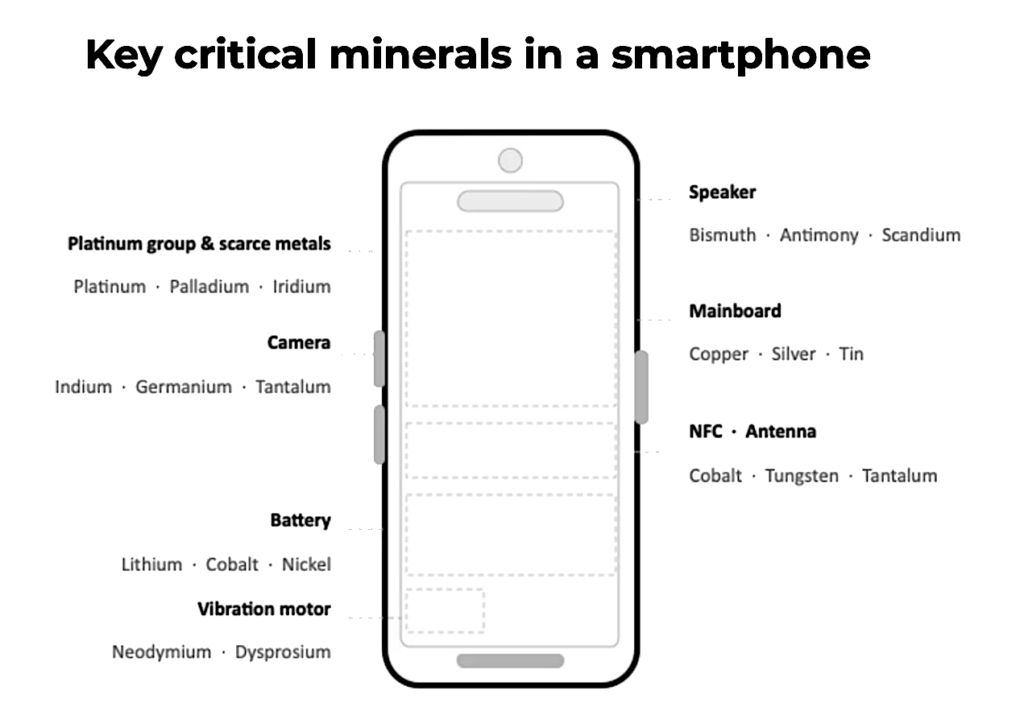
- The U.S. is undergoing a significant shift to reclaim its mineral supply chains, driven by a recognition of vulnerabilities in reliance on foreign sources, particularly China.
- Critical minerals are essential not only for consumer electronics and electric vehicles but also for national defense, highlighting the urgency of onshoring these supply chains.
- The Metals Royalty Company aims to fill the investment gap in critical minerals through a royalty model that aligns with the long-term nature of mining assets.
The urgency of America's mineral awakening cannot be overstated, as the nation grapples with its reliance on foreign sources for critical minerals essential to modern life and national security. The shift in focus towards onshoring supply chains is not merely a strategic pivot; it is a necessary response to the vulnerabilities exposed by decades of offshoring and dependency on countries like China. This transition is vital for maintaining the U.S.'s competitive edge and ensuring the stability of its economy and defense capabilities.
The historical context reveals a troubling trend: the U.S. once dominated global industrial production but has seen a significant decline in its mineral processing capabilities since the late 20th century. The decision to offload "dirty" industries under the guise of free trade has led to a substantial loss of manufacturing jobs and the erosion of entire communities. As China capitalized on this shift, it developed a near-monopoly on processing critical minerals, controlling a staggering percentage of global supply. This concentration poses a direct threat to U.S. interests, as critical minerals are foundational to everything from smartphones to military hardware.
The implications of this dependency are profound. The interconnectedness of modern technology and defense systems with critical minerals means that any disruption in supply can have cascading effects. For instance, the materials required for electric vehicle batteries and advanced weaponry are predominantly sourced from regions where U.S. influence is limited. As the U.S. government mobilizes to address these challenges, it is clear that the path to mineral independence will not be straightforward. The timelines for developing new mining projects are lengthy, often spanning decades, which complicates immediate responses to supply chain disruptions.
In response to these challenges, the U.S. government is initiating a comprehensive industrial policy reversal, investing heavily in domestic mining and processing capabilities. Agencies are now actively engaging in funding and facilitating projects aimed at revitalizing the mineral sector. However, the structural constraints of public capital and the need for private investment present significant hurdles. The Metals Royalty Company, with its innovative approach to financing through royalty agreements, seeks to bridge this gap by aligning investment strategies with the long-term nature of mining operations. This model not only provides necessary capital but also ensures that investments are sustainable and resilient against market fluctuations.
As the U.S. embarks on this critical journey towards mineral independence, the focus must remain on building a robust and diversified supply chain that can withstand future challenges. The collaborative efforts between government, private capital, and industry stakeholders will be essential in achieving this goal. The success of these initiatives will ultimately determine the U.S.'s ability to reclaim its position as a leader in the global mineral landscape, ensuring both economic prosperity and national security for generations to come.