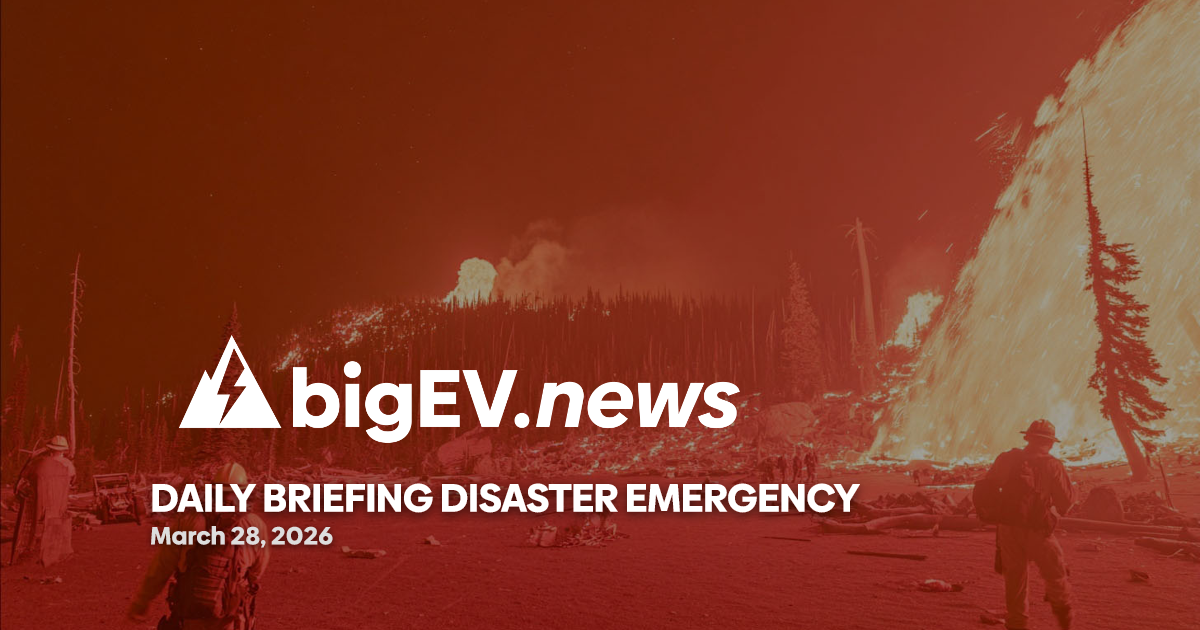
Real-time intelligence platforms and predictive analytics are fundamentally reshaping how emergency management organizations coordinate response operations and allocate critical resources during natural disasters.
At a glance: The disaster response technology landscape is experiencing rapid consolidation around artificial intelligence, mobile-first situational awareness, and resilient communications infrastructure. Flash flood prediction capabilities have expanded to 150 countries through Google's Flood Hub platform, while mobile device integration with real-time mapping systems is enabling multi-agency coordination at unprecedented scale. Emergency management professionals are increasingly adopting AI-powered damage assessment, call-taking automation, and logistics forecasting tools, though adoption remains uneven across well-resourced and under-resourced jurisdictions. The convergence of satellite connectivity, wearable biometric monitoring, and cloud-based common operating pictures represents a fundamental shift from reactive to orchestrated disaster response frameworks.
Technology advance: Google has deployed its flash flood forecasting model across urban areas in 150 countries through the Flood Hub platform, utilizing a Long Short-Term Memory neural network trained on historical news reports and global weather forecasts to predict flash flood probability in specific geographic areas. The system addresses one of the most lethal weather phenomena globally, as flash floods kill more than 5,000 people annually and remain among the most difficult weather events to predict. António José Beleza, an emergency response official at the Southern African Development Community, reported that the forecasting model enabled his organization to respond to floods more quickly during trials with Google. Samsung has advanced mobile situational awareness capabilities through deployment of the Android Team Awareness Kit in Texas, where first responders utilized ATAK-enabled devices to access real-time 3D mapping data, drone feed integration, and personnel tracking across multiple jurisdictions and shifts. The platform creates a continuously updated common operating picture that reduces blind spots during multi-agency handoffs by providing location technology and equipment tracking for more efficient operations. Samsung's rugged, purpose-built mobile devices integrate satellite technology with ATAK to enable emergency messaging and location sharing when cellular networks are destroyed, allowing users with smartphones and tablets to maintain connectivity even when coverage is nonexistent. Wearable technology paired with ATAK provides real-time biometric monitoring to support responder health and safety during extended operations, identifying fatigue, heat stress, and medical issues before escalation while enabling SOS and location tracking for personnel operating in fast-moving water, unstable terrain, and other high-risk environments.
Partnerships: Industrial AI platforms are enabling coordinated disaster response through partnerships between private and public sector organizations that unite disparate utility systems and regional mutual aid networks. These predictive analytics systems prioritize crew deployment across multiple utilities in a region, allowing separate systems to communicate and share resources during emergencies regardless of organizational affiliation. The framework emphasizes that during disaster response operations, organizational logos matter less than the collective ability to pull resources together and protect communities quickly. Emergency response agencies worldwide are now receiving data from Google's Flood Hub platform, indicating expanded partnerships between the technology company and government emergency management organizations across multiple continents and development contexts.
Acquisitions/expansions: The disaster recovery and emergency management technology market is experiencing significant expansion as enterprises recognize that AI outages, multi-cloud fragmentation, and rising resilience expectations are fundamentally redefining disaster recovery strategies. By 2026, disruption from outages, security events, regulation, and environmental factors has transitioned from rare to routine, driving enterprise investment in comprehensive disaster recovery infrastructure. This market expansion reflects broader recognition that AI is no longer experimental and multi-cloud deployment is no longer optional for organizations managing critical infrastructure and emergency response operations.
Regulatory/policy: Emergency management governance frameworks are evolving to address uneven AI adoption across jurisdictions and the challenge of unclear governance structures surrounding artificial intelligence deployment. Well-resourced jurisdictions are gaining capabilities that other communities cannot easily replicate, creating disparities in disaster response effectiveness. AI outputs can appear authoritative even when incomplete or wrong, introducing new blind spots into emergency management operations if deployed without critical evaluation. By 2026, artificial intelligence supports damage assessments, call taking, translation services, logistics forecasting, and situational awareness across emergency management agencies, though the challenge remains not the technology itself but ensuring thoughtful deployment that functions as a force multiplier rather than introducing new vulnerabilities into response systems.
Finance/business: The convergence of mobile technology, artificial intelligence, and resilient communications infrastructure is creating a repeatable framework that strengthens disaster response across all disaster types and enables effective, safe operations at scale. Blending cellular connectivity with satellite and other resilient communication methods ensures disaster responders remain connected even when towers are damaged, power is lost, or networks become congested. This integrated approach combines real-time common operating pictures, resilient communications, and rugged mobile technology into comprehensive solutions that address the fundamental challenge of maintaining situational awareness and coordination during complex, multi-jurisdictional emergency response operations. The market opportunity reflects growing recognition that modern disasters demand mobile solutions as critical preparedness and situational awareness tools, with secure, mobile, and wearable technologies closing critical interoperability gaps by extending intelligence beyond fixed locations and allowing frontline responders to remain connected and aligned wherever and whenever disaster strikes.
Sources: Samsung Insights, Disaster Recovery Journal, TechCrunch, World Economic Forum, HS Today, Disaster Resilience News